
What a Professional AC Tune Up Actually Includes
Spring in Longview brings a short window of mild weather before the East Texas heat arrives with full force. That window is the best time of year to schedule a professional AC tune up. A tune up is not a quick look under the hood; it is a full inspection and service of every part that makes your air conditioner run safely and efficiently. Homeowners often assume their system is fine because it still blows cold air, but small issues can drain efficiency and shorten the life of the unit. A thorough tune up catches those issues early. It also keeps your manufacturer warranty valid, since most brands require annual professional service. Knowing what a real tune up looks like helps you spot shortcuts when hiring any HVAC company.
The Core Components of a Professional AC Tune Up
A legitimate AC tune up follows a detailed checklist that covers the indoor unit, the outdoor condenser, and the electrical system that ties them together. Every part of the system affects the others, so skipping steps leads to incomplete results. A trained technician will measure, test, and clean rather than just glance and go. The goal is to return the system to factory performance levels as closely as possible. You should expect the visit to take between 60 and 90 minutes for a standard residential system. Anything significantly shorter usually means important steps were skipped.
The Electrical Checks Inside a Professional AC Tune Up
The electrical side of your air conditioner is where many failures start, and it is the first priority in a proper tune up. A technician tests capacitor microfarad readings against the manufacturer rating, since a weak capacitor can cause hard starts, compressor strain, and eventual burnout. Contactor points are inspected for pitting and corrosion, which cause intermittent operation and can lead to the unit not starting at all. Voltage and amp draw readings on the compressor and fan motors reveal whether those components are pulling within their rated range.
Loose electrical connections are one of the most common problems found during a tune up, and they are also one of the most dangerous. A loose wire creates heat, which melts insulation and can spark a fire inside the condenser unit. The technician will tighten every connection at the contactor, capacitor, disconnect, and control board. Wire insulation gets checked for cracks, rodent damage, and heat scorching along the way. These small fixes prevent emergency breakdowns during the hottest weeks of summer.
Safety controls also get tested during the electrical portion of the tune up. The high pressure switch, low pressure switch, and float switch on the indoor coil all serve to shut the system down before damage occurs. A stuck or failed safety switch can allow the system to keep running through a serious problem, turning a small repair into a compressor replacement. The technician confirms each switch opens and closes at the correct point. This part of the inspection is quick but protects your largest investment in the system.
The Refrigerant and Airflow Portion of a Professional AC Tune Up
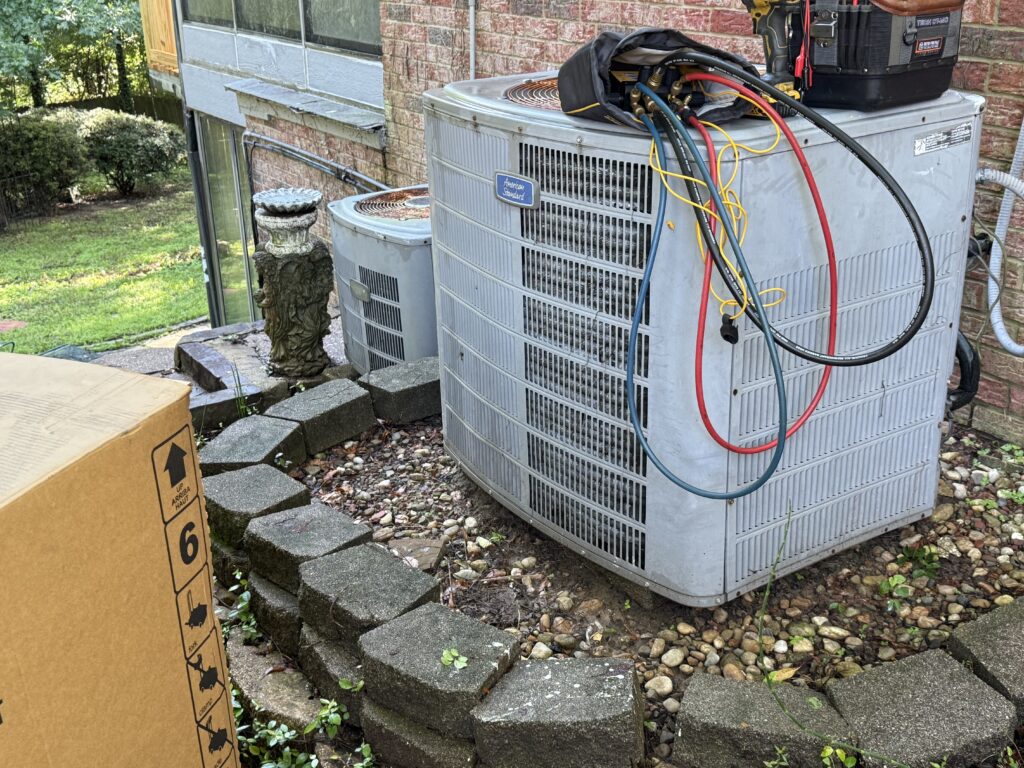
Refrigerant charge is the single biggest factor in cooling performance, and checking it correctly requires gauges, a thermometer, and time. A technician measures superheat and subcooling to confirm the charge matches the manufacturer specification for your specific equipment. An undercharged system freezes up, ices the coil, and strains the compressor; an overcharged system runs high head pressure and wastes energy. Topping off refrigerant without finding the leak is a red flag, since refrigerant does not get consumed during normal operation. If the charge is low, there is a leak somewhere that needs to be located and repaired.
Airflow across the indoor coil has to be correct for the refrigerant readings to mean anything. The technician checks the air filter, inspects the blower wheel for dust buildup, and measures static pressure in the duct system. A dirty blower wheel can cut airflow by 30 percent or more, which drops cooling capacity and raises humidity inside the home. The evaporator coil itself is inspected for biological growth, dirt accumulation, and proper drainage. Coil cleaning is included in most quality tune ups when buildup is present.
The condensate drain line is flushed during every tune up to prevent the most common summer service call in East Texas. Clogged drains cause water to back up into the air handler, trip the float switch, and shut the system off; worst case, they overflow and damage ceilings or flooring. The technician clears the line with a vacuum or nitrogen and adds a treatment tablet to slow algae growth. The drain pan is checked for cracks and proper slope. This single step prevents thousands of dollars in potential water damage.
The Outdoor Unit Service in a Professional AC Tune Up
The condenser coil outside your home collects pollen, grass clippings, cottonwood seeds, and dirt throughout the year. A dirty condenser coil cannot reject heat properly, which forces the compressor to work harder and run longer. The technician rinses the coil with a coil cleaner and water, working from the inside out to push debris away rather than deeper into the fins. Bent fins get straightened with a fin comb to restore airflow across the coil surface. This one step can drop head pressure by 20 to 50 psi on a neglected unit.
The condenser fan motor is inspected, lubricated where applicable, and tested for proper amp draw. Fan blades are checked for balance and cracks, since an unbalanced blade shortens motor bearing life dramatically. The technician also looks at the concrete or composite pad under the unit to confirm it is level, because a tilted unit puts stress on the compressor and refrigerant lines. Surrounding vegetation gets noted so the homeowner knows to keep a two foot clearance around the unit. These details extend equipment life by years.
The compressor itself is evaluated through several indirect measurements, since you cannot open it up for inspection. The technician checks start up amperage, running amperage, and temperature at the discharge line. Unusual readings indicate internal wear, valve problems, or refrigerant issues before a full failure occurs. Catching compressor problems early sometimes allows for repair instead of replacement. A replacement compressor on a residential system can run several thousand dollars, so early detection matters. Scheduling an air conditioning tune up before summer is the most reliable way to catch these issues in time.
Why Spring Is the Best Time for a Professional AC Tune Up
Timing matters more than most homeowners realize when it comes to AC service. Running a neglected system through the first 100 degree day is how minor issues become major breakdowns, and emergency repair calls in July cost more and take longer to schedule. Spring tune ups give you time to address any problems found during the inspection before you actually need the cooling. Parts are easier to source, technicians have open schedules, and you avoid sitting in a hot house waiting for service. The small cost of a tune up pays for itself through lower energy bills and avoided emergency fees.
The Energy Savings From a Professional AC Tune Up
A properly tuned air conditioner uses significantly less electricity than a neglected one. Dirty coils, low refrigerant, and clogged filters each cost efficiency on their own, and the effects compound when multiple issues exist. Department of Energy data shows that a dirty condenser coil alone can raise energy use by 30 percent. Combine that with a dirty evaporator coil and incorrect refrigerant charge, and cooling costs can nearly double over a well maintained system. Summer electric bills in East Texas are already high without paying for wasted energy.
Short cycling is another efficiency killer that a tune up addresses directly. A system that turns on and off too frequently uses more electricity on each startup than during steady running. Causes include oversized equipment, dirty coils, low refrigerant, and failing thermostats; a tune up identifies which factor applies to your system. Correcting short cycling reduces wear on the compressor and extends equipment life. It also improves humidity control inside the home, which matters in our climate.
Proper airflow reduces run time, which is the other half of the energy equation. When cold air reaches every room as designed, the thermostat satisfies faster and the system shuts off sooner. Blocked vents, leaky ducts, and dirty blower components all extend run time unnecessarily. A tune up addresses the equipment side of airflow, and a technician can recommend air duct service if the distribution system itself needs attention. Both sides have to work together for real efficiency.
The Equipment Lifespan Benefits of a Professional AC Tune Up
Residential air conditioners are designed to last 12 to 15 years with proper maintenance, but neglected systems often fail in 8 to 10. The difference comes down to wear on the compressor, motors, and electrical components. Heat, stress, and dirty operation shorten the life of every part inside the unit. Annual tune ups keep each component running within its designed parameters. That translates to years of additional service from the same equipment.
The compressor is the most expensive part to replace, and it is also the most sensitive to neglect. Low refrigerant causes the compressor to overheat; high refrigerant causes it to work against excessive pressure; dirty coils cause both problems at once. A tune up keeps all three factors in the right range. Compressor replacement often costs more than half the price of a new system, which is why many homeowners choose to replace the entire unit when a compressor fails. Preventive maintenance avoids that decision entirely.
Blower motors, fan motors, and capacitors also last longer on a maintained system. Dirty blower wheels make the motor work harder, pulling higher amps and running hotter than designed. Weak capacitors strain motor windings and shorten motor life by years. Catching a weak capacitor during a $150 tune up prevents a $500 motor replacement later. The math works out in favor of maintenance every time.
Why You Need a Trusted HVAC Company for Your AC Tune Up
Not every company that offers an AC tune up actually performs one the right way. Some use the service as a sales pitch for unnecessary repairs or replacement systems, while others rush through a checklist without taking real measurements. Picking the right company matters as much as scheduling the service in the first place. You want a technician who documents readings, explains findings, and recommends only what the equipment actually needs. That kind of service builds trust over years, not one visit.
The Questions to Ask Before Booking an AC Tune Up
Ask how long the tune up typically takes and what is included on the written checklist. A thorough residential tune up runs 60 to 90 minutes and covers 20 or more specific checks. Companies that quote 30 minute visits are not performing the full service, no matter what they call it. The checklist should include specific measurements, not vague phrases like “check system operation.” Written documentation protects both you and the technician.
Ask whether the company is licensed and insured for HVAC work in Texas. The state requires a TACLA or TACLB license for air conditioning contractors, and the number should appear on the company website, trucks, and invoices. Insurance protects you if something goes wrong on your property during the service. Unlicensed work also voids most manufacturer warranties, which can cost you thousands if a major component fails later. Verification takes two minutes and saves major headaches.
Ask about pricing structure and whether repairs are quoted before work begins. A good company gives a flat rate for the tune up and separate written quotes for any repairs found. Surprise charges at the end of the visit are a warning sign of upselling practices. You should also ask whether parts carry a warranty and for how long. Clear answers to these questions tell you a lot about how the company operates.
The Warning Signs of a Low Quality AC Tune Up
Watch for technicians who spend more time in their truck than at your equipment. A real tune up requires hands on inspection, measurement, and cleaning that cannot be rushed. If the visit wraps up in 20 minutes with no readings documented, the service was not performed as promised. Pressure to replace the entire system based on a tune up is another red flag, especially if no specific failing components are identified. Legitimate recommendations come with measurements and reasoning.
Coupon tune ups advertised at very low prices often exist to generate repair and replacement sales. The technician arrives, performs a quick look, and produces a long list of expensive problems. Some problems may be real, but the business model depends on finding something wrong on every call. Trusted companies price tune ups to cover the actual cost of thorough work. Extremely low prices almost always come with strings attached.
Lack of documentation is the biggest warning sign of all. A real tune up produces a report with refrigerant pressures, electrical readings, temperature splits, and notes on any issues found. Without that paper trail, you have no way to verify the work was done or to track equipment condition over time. You also cannot use the service to support a warranty claim later. Always request a written report before the technician leaves.
Why Choose R.C.s A/C Reliable Climate for Your AC Tune Up
R.C.s A/C Reliable Climate has served Longview and the surrounding East Texas area with honest HVAC service for years. We hold Texas HVAC License #TACLA129043C, and every technician on our team is trained to perform a complete tune up, not a sales call. We document readings, explain findings in plain language, and only recommend repairs that your equipment actually needs. No unnecessary upsells and no pressure tactics, just straight information so you can make the best decision for your home.
Our tune ups include a detailed written checklist with measurements from every part of your system. You receive a copy of the report at the end of the visit, which helps you track equipment condition year over year. We also back our work with a 10 year parts warranty and a 1 year labor warranty on repairs, which is among the strongest coverage in the area. Financing is available for larger repairs or system replacements when the time comes.
Ready to get your system checked before summer hits? Click here to schedule your AC tune up with our team. We serve homeowners across Longview, White Oak, Gilmer, Hallsville, Kilgore, Lakeport, Liberty City, Marshall, and Gladewater. Call us at (903) 316-6855 or email info@iwantclimate.com to book your appointment. We answer the phone, we show up on time, and we do the job right the first visit.