
What to Do When Your AC Freezes Up in Hot Weather
Few things are more frustrating than walking outside on a hot Texas afternoon and noticing your air conditioner is covered in ice. A frozen AC unit is one of the most common summer problems homeowners in Longview face, and it often happens at the worst possible time. When your AC freezes up in hot weather, the system stops cooling your home properly, your energy bills climb, and the strain on the compressor can lead to expensive damage. The good news is that a frozen air conditioner is usually fixable if you act quickly and understand what caused the ice to form in the first place. Most freeze-ups come down to airflow issues, refrigerant problems, or dirty components that have been ignored for too long. Knowing how to respond can save you hundreds of dollars in repairs and keep your home comfortable through the hottest months of the year. At R.C.s A/C Reliable Climate, we see frozen AC units constantly during East Texas summers, and we want every homeowner to know exactly what steps to take.
Why Your AC Freezes Up in Hot Weather
It seems strange that an air conditioner would freeze when the temperature outside is in the upper 90s, but the science behind it makes perfect sense. Your AC works by moving refrigerant through coils that absorb heat from the air inside your home. When something disrupts that heat exchange, the coils get too cold and condensation on them turns to ice. Once ice starts forming, it blocks airflow even more, which causes the unit to freeze faster and harder. By the time you notice warm air blowing from your vents, the entire evaporator coil may be encased in a solid block of ice. Understanding the root causes of an AC freeze up helps you prevent it from happening again next summer.
Dirty Air Filters Cause Your AC to Freeze Up in Hot Weather
A clogged air filter is by far the most common reason an air conditioner freezes during hot weather. When the filter is packed with dust, pet hair, and debris, air cannot move freely across the evaporator coil. That restricted airflow drops the coil temperature below freezing, and moisture in the air starts turning to ice almost immediately. Most homeowners do not realize how quickly a filter can clog during summer, especially in East Texas where pollen, dust, and humidity are constant factors. Pets, open windows, and high-traffic households can shorten filter life even further. Checking your filter every 30 days during heavy cooling season is one of the simplest habits you can build to protect your system.
Replacing a dirty filter is something every homeowner can do without any tools or experience. Standard one-inch filters typically last 30 to 60 days, while higher-end pleated filters may last up to 90 days under normal conditions. Always match the filter size and MERV rating recommended by your HVAC system manufacturer, since using a filter that is too dense can actually restrict airflow and cause the same freezing problem. Write the date on the edge of the filter with a marker so you remember when it was installed. If you have not changed your filter in months and your AC just froze up, this is almost certainly the cause. Regular filter changes also improve indoor air quality and reduce strain on the blower motor.
If you change the filter regularly and your AC still freezes, the problem may be deeper inside the system. Dust buildup on the evaporator coil itself can mimic the effect of a dirty filter, even when your filter looks clean. Over time, fine particles slip past the filter and coat the coil fins, blocking airflow at the source. Cleaning the evaporator coil is a job best left to a trained HVAC technician because the coil is delicate and located in a sensitive part of the air handler. Need air conditioning service for a frozen unit? Click here for our air conditioning service. Our team can diagnose airflow issues and restore your system to full cooling capacity quickly.
Low Refrigerant Makes Your AC Freeze Up in Hot Weather
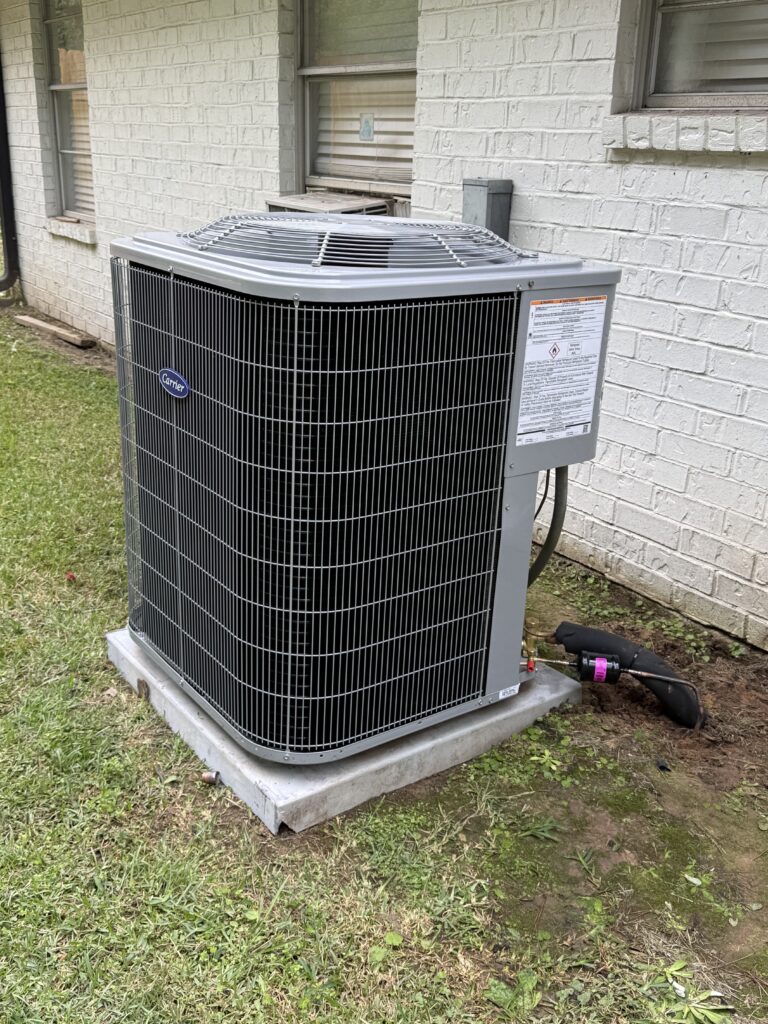
Low refrigerant is the second leading cause of an AC freezing up during hot weather, and it is a problem that will not fix itself. Refrigerant operates inside a sealed system, so if levels are low, there is a leak somewhere in the lines, coils, or connections. When refrigerant pressure drops, the temperature inside the evaporator coil falls well below freezing, and ice begins forming on the copper lines and coil surface. You might notice hissing sounds near the indoor unit, ice on the larger copper line outside, or warm air coming from the vents even when the system is running. Refrigerant leaks are not something to ignore because they get worse over time and can eventually destroy the compressor. A failed compressor is often the single most expensive repair on any air conditioning system.
Diagnosing a refrigerant leak requires specialized tools, gauges, and EPA certification to handle the chemicals safely and legally. A technician will use electronic leak detectors, UV dye, or nitrogen pressure tests to find exactly where the refrigerant is escaping. Once the leak is located, the damaged section is repaired or replaced, the system is vacuum tested, and the correct charge of refrigerant is added back in. Topping off refrigerant without fixing the leak is a temporary fix at best, and it wastes money since the refrigerant will just escape again. R22 refrigerant has also been phased out, so older systems may need significant updates if they still rely on it. Modern systems use R410A or the newer R454B, which require different equipment and procedures.
Homeowners sometimes try to add refrigerant themselves using DIY kits sold online, but this almost always causes more harm than good. Overcharging a system is just as damaging as undercharging it, and improper handling of refrigerant can violate federal EPA regulations. The compressor relies on precise refrigerant levels to operate within safe pressure and temperature ranges, and any deviation shortens its lifespan. Professional service ensures the charge is exact, the leak is sealed, and your system is restored to manufacturer specifications. If your AC keeps freezing up despite clean filters, refrigerant is the next thing to check. Our technicians at R.C.s A/C Reliable Climate are licensed under Texas HVAC License #TACLA129043C and trained to handle every refrigerant type safely.
Broken Blower Fans Cause Your AC to Freeze Up in Hot Weather
The blower fan inside your air handler is responsible for pulling warm air across the evaporator coil and pushing cool air through your ductwork. When that fan slows down, runs intermittently, or stops working altogether, airflow drops dramatically and the coil temperature plunges. Just like with a dirty filter, the reduced airflow allows moisture to freeze on the coil instead of being absorbed and carried away. Blower motor problems can stem from worn bearings, failing capacitors, electrical issues, or simple wear and tear after years of use. You might hear unusual humming, rattling, or grinding sounds coming from the indoor unit before the fan fails completely. Some homeowners notice that airflow from the vents feels weak even before the unit freezes.
Capacitors are one of the most common culprits behind blower fan failure, especially in older systems that have been through several Texas summers. These small components store the electrical charge needed to start and run the motor, and they degrade over time from heat and constant cycling. A failing capacitor often shows up as a fan that hums but does not spin, or one that starts slowly and struggles to reach full speed. Replacing a capacitor is relatively inexpensive, but it requires working with live electrical components and should be handled by a qualified technician. Ignoring a weak capacitor will eventually burn out the entire blower motor, which is a much costlier repair. Regular maintenance catches these issues early before they cascade into bigger problems.
Ductwork issues can also create blower-related freezing, even when the fan itself is working perfectly. Crushed flex ducts, disconnected joints, or closed vents in unused rooms restrict airflow and force the system to work against itself. Closing too many supply registers is a mistake homeowners often make to save energy, but it can cause the same low-airflow conditions that lead to a frozen coil. Want professional duct service to improve airflow throughout your home? Click here for our air ducts service. Keeping ducts sealed, balanced, and clean is essential for preventing freeze-ups and getting the most out of your air conditioning system.
How to Thaw Your AC When It Freezes Up in Hot Weather
If you discover that your AC is frozen, the first thing to do is turn the system off completely at the thermostat. Running a frozen unit will not cool your home and can permanently damage the compressor, blower motor, and refrigerant lines. The ice needs time to melt naturally, and forcing the system to run only makes the situation worse. Most frozen AC units take between one and twenty-four hours to fully thaw depending on how much ice has built up. While you wait, there are a few smart steps you can take to speed up the process and prevent the problem from happening again. Following the right thawing procedure also helps you avoid water damage from the melting ice.
Turn Off Your AC When It Freezes Up in Hot Weather
The moment you see ice on your AC unit, shut the system off at the thermostat by switching it from cool to off. This stops refrigerant from circulating and gives the evaporator coil a chance to warm up and melt the ice. Some thermostats have a fan-only setting, which can actually help speed up the thawing process by circulating warm indoor air across the frozen coil. Running just the fan with the cooling off pushes room-temperature air through the system and melts ice faster than letting it sit idle. Be sure not to switch the thermostat back to cool until every bit of ice is gone, even if your home is getting uncomfortably warm. Patience here protects your investment and prevents bigger repair bills down the road.
While the unit thaws, place towels or a shallow pan under the indoor air handler to catch melting water. Frozen ACs can release a surprising amount of water as they thaw, and that water has to go somewhere. The condensate drain line is designed to handle normal moisture, but it may be overwhelmed during a rapid thaw or may itself be clogged. Water damage to floors, drywall, and ceilings is a common secondary problem after a major freeze-up. Check the area around your air handler every hour or so during the thawing process to catch any leaks early. If you have a condensate pump, make sure it is working properly and not adding to the flooding.
After the ice has fully melted, take a close look at the system before turning it back on. Check the air filter and replace it if it is dirty, since this is the easiest fix and often solves the problem entirely. Look at the supply vents throughout your home to make sure none are blocked by furniture, rugs, or closed dampers. Listen carefully when you restart the system to see if the blower sounds normal and air is moving strongly through the vents. If the unit freezes again within a few hours of restarting, the issue is more serious than a dirty filter and requires professional attention. Calling a technician at this point saves you from making the damage worse.
Inspect Your AC After It Freezes Up in Hot Weather
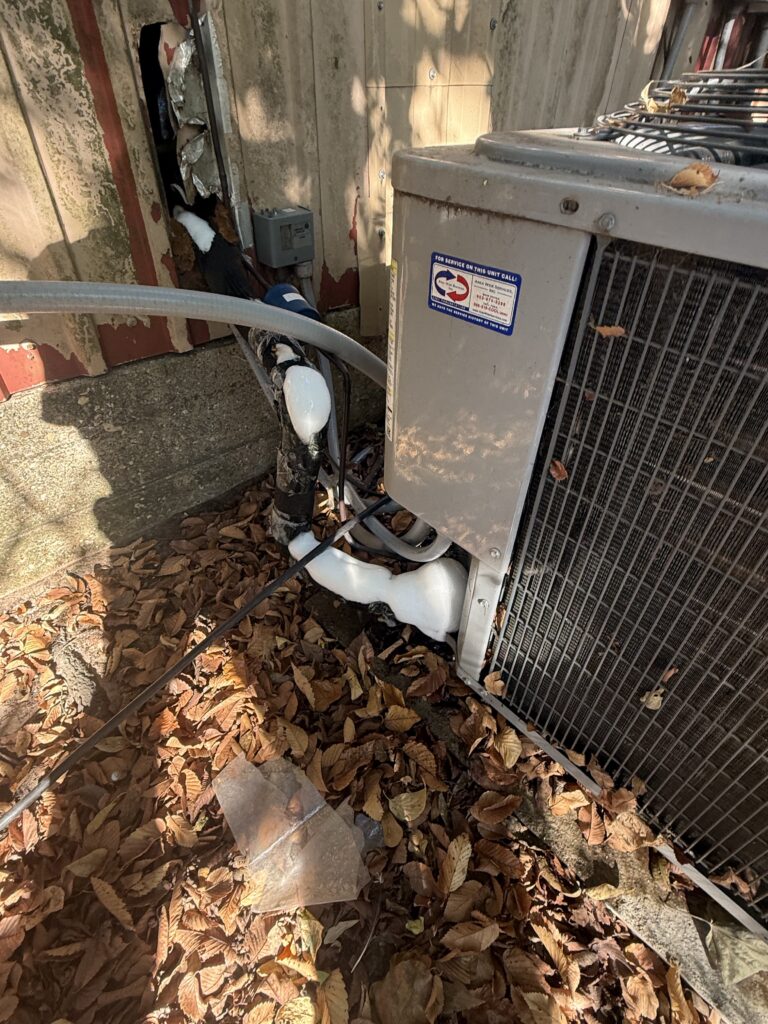
Once your system has fully thawed, walk around the outdoor condenser unit and look for obvious signs of trouble. The condenser should be free of grass clippings, leaves, and debris that can block airflow and cause similar overheating problems. Trim any plants or shrubs that have grown within two feet of the unit, since proper clearance is essential for heat exchange. Check the larger of the two copper lines running to the unit, which should feel cold but not be covered in ice or frost. If you see ice forming on this line shortly after restart, that is a strong indicator of low refrigerant or another internal issue. Take a quick photo of anything unusual so you can show your technician when they arrive.
Inside the home, check the evaporator coil access panel if you can reach it safely, but do not remove panels that are sealed or require tools. Look for water stains, rust, or signs of past freeze-ups around the air handler and drain pan. A clogged condensate drain can back up water into the system and contribute to icing problems, especially during humid East Texas summers. You can sometimes clear a clogged drain line by attaching a wet/dry vacuum to the outdoor end of the PVC pipe and running it for a few minutes. Adding a cup of distilled vinegar to the drain access port every few months helps prevent algae and mold buildup. These small maintenance steps go a long way toward preventing future freeze-ups.
Pay attention to how your system performs during the first few hours after restarting. The air coming from your vents should feel noticeably cooler within ten to fifteen minutes of the unit kicking on. Your thermostat should show a steady temperature drop, and the system should cycle on and off normally rather than running constantly. If cooling is weak, cycles are short, or the unit struggles to reach the set temperature, something is still wrong inside the system. Pushing a struggling AC through a Texas summer without service is a recipe for compressor failure. Booking a diagnostic visit early in the season is always cheaper than emergency repairs in August.
Call a Professional When Your AC Freezes Up in Hot Weather
Some AC freeze-ups can be solved by a homeowner with a new filter and a little patience, but many require professional diagnosis to truly fix. If your system has frozen more than once in the same season, there is a deeper issue that DIY troubleshooting will not resolve. Refrigerant leaks, failing capacitors, dirty coils, and blower motor problems all require tools, training, and licensing to repair safely. Attempting these repairs without proper equipment can void your warranty, damage the system, or create safety hazards. A professional tune-up identifies small problems before they grow into major breakdowns. Routine maintenance is the single best defense against summer freeze-ups in East Texas.
R.C.s A/C Reliable Climate offers honest recommendations with no unnecessary upsells, which matters when you are already stressed about a broken AC. Our technicians come to your home, run a full diagnostic, and explain exactly what is happening with your system in plain language. We will tell you if a simple repair will solve the problem, or if a part needs to be replaced, and we will give you the price upfront. There are no surprise charges, no pressure tactics, and no pushing for replacement when a repair will do. That is the kind of service that has earned us a reputation across Longview and the surrounding East Texas communities. We treat every customer the way we would want our own family treated.
We also offer 24/7 emergency HVAC service for the times when your AC freezes up on a Saturday night or a holiday weekend. East Texas heat does not take days off, and neither do we. Whether you need same-day service or a scheduled maintenance visit, our team is ready to help with reliable, professional work. Need air conditioning service right away? Click here for our air conditioning service to schedule fast repair from a team you can trust. We back every repair with a 10-year parts warranty and a 1-year labor warranty for full peace of mind.
Why You Need R.C.s A/C Reliable Climate When Your AC Freezes Up
A frozen AC during a Texas summer is more than an inconvenience; it is a sign that your system needs immediate attention from someone who knows what they are doing. Choosing the right HVAC company makes the difference between a quick fix and a recurring headache that costs you thousands. R.C.s A/C Reliable Climate has built a reputation in Longview and across East Texas for fast, honest, and dependable air conditioning service. We show up on time, diagnose the real problem, and fix it correctly the first time. Our team is licensed, insured, and dedicated to providing five-star service on every call.
Fast Response When Your AC Freezes Up in Hot Weather
When your AC freezes up in the middle of a Texas heatwave, every hour without cooling makes your home harder to live in. Our team prioritizes emergency calls and gets technicians on the road as quickly as possible, often the same day you call. We serve Longview, White Oak, Gilmer, Hallsville, Kilgore, Lakeport, Liberty City, Marshall, and Gladewater with rapid response times. Each truck is fully stocked with common parts so most repairs can be completed during the first visit. That means less waiting, less heat exposure, and faster relief for your family. We respect your time and your home, and we work efficiently from the moment we arrive.
Our 24/7 emergency service means you are never stuck with a broken AC for days waiting on the next appointment slot. Weekends, evenings, and holidays are all covered, because we know cooling failures rarely happen at convenient times. When you call our line, you reach a real person who can dispatch help immediately. We carry the diagnostic tools, refrigerants, and replacement parts needed to handle the vast majority of freeze-up situations on the spot. Quick service is not just about convenience; it also limits the damage that running a frozen system can cause. The sooner we arrive, the more of your system we can save.
Free estimates on new HVAC installations are part of how we earn trust with new customers. If your existing system is too old or too damaged to repair cost-effectively, we will lay out your replacement options without any pressure. Financing is available for both repairs and full system replacements to help spread the cost over time. We work with homeowners on tight budgets to find solutions that make sense for their needs. No customer is ever pushed into a purchase they cannot afford. That straightforward approach is what keeps our customers calling us year after year.
Honest Repairs When Your AC Freezes Up in Hot Weather
R.C.s A/C Reliable Climate is built on ethos, and that shows in how we handle every repair call. We diagnose your AC freeze-up thoroughly before recommending any service, and we explain the cause in language you can understand. There are no scare tactics, no inflated estimates, and no recommendations for parts you do not actually need. If a simple filter change and coil cleaning will solve your problem, that is what we will do. Our reputation is more important to us than any single repair ticket. That is why so many customers in East Texas refer us to their friends and family.
Our 10-year parts warranty and 1-year labor warranty back up every repair and installation we complete. That kind of coverage is rare in the HVAC trade and reflects the confidence we have in our work. If a part fails within the warranty period, we replace it without any extra charge to you. That protection gives our customers peace of mind long after we leave the driveway. Quality work and quality parts are what make those warranties possible. We do not cut corners, and we do not use cheap components that fail in a year.
Every technician on our team is trained, licensed under Texas HVAC License #TACLA129043C, and committed to professional service. We treat your home with respect, wear shoe covers when needed, and clean up before we leave. You will always know who is coming, what the price is, and what work was done. That transparency builds the kind of long-term relationships our local business depends on. Honest service is not a marketing slogan for us; it is the foundation of everything we do.
Why Choose R.C.s A/C Reliable Climate When Your AC Freezes Up
R.C.s A/C Reliable Climate is locally owned and operated right here in Longview, Texas, and we treat our neighbors like family. We understand East Texas summers because we live through them too, and we know how critical reliable cooling is in this climate. Choosing a local company means faster service, better accountability, and direct relationships with the people fixing your system. We are not a national chain reading from a script; we are your neighbors and we stand behind every job. That local commitment shows in everything from how we answer the phone to how we follow up after a service call.
Our services cover everything from air conditioning and heating to commercial refrigeration and walk-in coolers. That broad expertise means we can handle freeze-ups in residential central AC systems, mini-splits, heat pumps, and commercial equipment. No job is too small or too complex for our team to handle correctly. We bring the same level of care and skill to a single-room mini-split as we do to a full commercial refrigeration installation. Our customers know they can call us for any cooling or heating need throughout the year. That reliability is what has built our reputation across East Texas.
Call R.C.s A/C Reliable Climate today at (903) 316-6855 or email info@iwantclimate.com to schedule service for your frozen AC. We are located at 3 Lewis Drive in Longview, ready to serve you with fast, honest, and reliable HVAC repair. With 24/7 emergency availability, financing options, and a team dedicated to five-star service on every visit, we are the trusted choice in East Texas. Do not let a frozen AC ruin your summer; let us get your system running cool again. We look forward to being the HVAC company you call for years to come.