
Why Consistent Temperature Matters for Food Safety
For any business in the food service industry, the walk-in cooler or freezer is the vault that protects the most valuable liquid asset. Inventory represents a significant portion of operating capital, and its safety directly correlates to the health of the customers and the reputation of the establishment. In Longview, the intense Texas heat places a relentless load on commercial refrigeration equipment. A breakdown or even a minor inconsistency in temperature can have catastrophic consequences. Food safety is not merely about keeping things cool; it is about maintaining a precise, unwavering environment that inhibits biological activity. When temperatures fluctuate, even by a few degrees, the invisible clock of spoilage accelerates. Understanding the science behind these requirements helps business owners appreciate the critical nature of reliable refrigeration.
The stakes involved in food storage are incredibly high. The Centers for Disease Control and Prevention estimates that millions of people get sick from foodborne illnesses every year. Many of these cases are traced back to improper storage temperatures in commercial kitchens. When a customer walks into a restaurant, they place their trust in the kitchen’s ability to handle ingredients safely. A single outbreak of food poisoning can destroy a business that took decades to build. Beyond the legal and financial repercussions, there is a moral obligation to serve safe food. Consistency in refrigeration is the first line of defense against pathogens. It is the silent guardian that ensures the steak served on Saturday is just as safe as when it was delivered on Tuesday.
The Science of the Danger Zone
The primary enemy of food safety is bacteria. Microorganisms like Salmonella, E. coli, and Listeria exist naturally in the environment and on raw ingredients. They require three things to thrive which are food, moisture, and warmth. The concept of the danger zone is taught in every food safety certification course, but its practical application relies heavily on mechanical consistency. The danger zone is the temperature range between forty degrees and one hundred and forty degrees Fahrenheit. Within this window, bacteria can double in number in as little as twenty minutes. This exponential growth means that a safe piece of meat can become a biohazard in a very short period if the temperature creeps up.

Refrigeration does not kill bacteria. It simply slows down their reproduction to a near halt. When a walk-in cooler holds a steady temperature of thirty-five to thirty-eight degrees, the bacteria are dormant. However, if the temperature fluctuates and rises to forty-five degrees for just an hour, the bacteria wake up and begin to multiply. Once they start growing, bringing the temperature back down does not reverse the process. The bacterial load remains higher than it was before. Repeated fluctuations create a stair-step effect where the population of pathogens grows with every spike in temperature. This is why maintaining a flat, consistent baseline is crucial. It is not enough to be cold most of the time; the unit must be cold all of the time.
Listeria presents a unique challenge because it can continue to grow, albeit slowly, at standard refrigeration temperatures. It thrives in cool, damp environments. If a cooler is running slightly warm, perhaps around forty-two degrees, Listeria has a significant advantage. It can colonize drains, floors, and even the food itself. A strictly maintained temperature below forty degrees is the only way to keep this aggressive pathogen in check. Consistency ensures that there are no windows of opportunity for these organisms to establish a foothold in your inventory.
The Impact of Temperature Fluctuations on Food Quality
Safety is the priority, but quality is the currency of the restaurant business. Temperature consistency plays a massive role in the texture, flavor, and appearance of fresh ingredients. When temperature fluctuates, it causes physical changes in the cellular structure of food. Fresh produce is particularly sensitive. Leafy greens and herbs will wilt and turn slimy if they are subjected to cycles of warming and cooling. The fluctuation accelerates the respiration rate of the vegetables, causing them to consume their own natural sugars and degrade rapidly. A cooler that swings ten degrees throughout the day essentially ages the produce faster than a stable unit.
In the context of frozen foods, consistency is vital to prevent freezer burn. Freezer burn is caused by sublimation, where ice turns directly into water vapor. This process is driven by temperature changes. When a walk-in freezer warms up slightly, the ice crystals on the surface of the food melt or evaporate. When the unit cycles back down, that moisture refreezes as large, jagged ice crystals. These crystals tear the cell walls of the meat or vegetables. The result is a product that is dry, tough, and discolored. While freezer-burned food is technically safe to eat, the quality is so poor that it often ends up in the trash.
Dairy products and sauces are also victims of inconsistency. Emulsions can break if they get too warm or too cold. Milk and cream will spoil well before their expiration dates if the storage temperature is unstable. Even a fluctuation of a few degrees can change the acidity and bacterial composition of cheese. For a chef, these inconsistencies make it impossible to guarantee the standard of the final dish. A reliable refrigeration system protects the integrity of the ingredients, ensuring that the investment in high-quality food yields a high-quality dining experience.
Causes of Inconsistent Temperatures
Understanding why temperatures fluctuate is the first step in solving the problem. The most obvious cause is human behavior. Every time the door to a walk-in cooler is opened, heavy cold air rushes out and light warm air rushes in. In a busy kitchen, the door might be opened dozens of times an hour. If the unit does not have the capacity to recover quickly, the average temperature inside the box will rise. Staff leaving the door propped open during deliveries is a common error that spikes the temperature for extended periods. Strip curtains are designed to mitigate this, but they are often tied back or missing in many establishments.
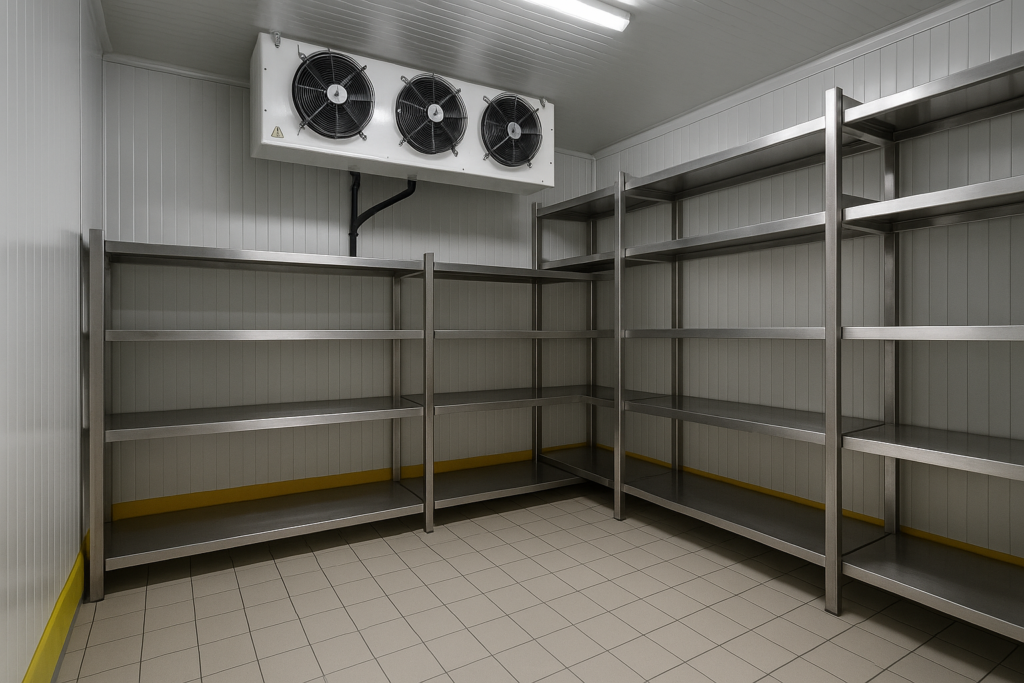
Mechanical issues are the silent culprits of inconsistency. A dirty condenser coil prevents the system from rejecting heat efficiently. The compressor has to run longer to cool the box, and it may struggle to reach the set point during the heat of the day. This leads to a pattern where the box is cold at night but warm in the afternoon. Low refrigerant levels also cause fluctuations. A system that is low on charge will have a lower cooling capacity. It might run continuously but never quite stabilize the temperature. This results in a slow, creeping rise in temperature that can go unnoticed until it crosses the danger threshold.
The thermostat and control system act as the brain of the operation. If the thermostat is out of calibration, it is making decisions based on bad data. It might turn the compressor off thinking the box is thirty-five degrees when it is actually forty degrees. Additionally, the location of the sensing bulb matters. If it is placed in a warm spot near the door, it will run the unit too much and freeze the food in the back. If it is placed directly in the air stream of the fans, it might short cycle the unit, leading to rapid temperature swings. Precision controls and proper sensor placement are essential for a stable environment.
Condensation and Humidity Control
Temperature and humidity are inextricably linked in refrigeration. When warm air infiltrates a cool environment, it carries moisture. As that air cools down, it loses its ability to hold water vapor, and condensation forms. Inconsistent temperatures exacerbate this issue. If the cooler warms up, the air holds more moisture. When it cools back down, that moisture is released as water on the walls, ceilings, and food packaging. This free water is a catalyst for mold and bacterial growth. Bacteria need moisture to move and reproduce. Wet cardboard boxes and damp floors create a perfect breeding ground.
Excessive humidity caused by temperature swings also puts a strain on the evaporator coil. The moisture in the air freezes onto the coil fins. A small amount of frost is normal and is handled by the defrost cycle. However, if the temperature fluctuation is severe, the frost can build up into a block of ice. This ice restricts airflow, which further destabilizes the temperature. It becomes a vicious cycle where the ice causes warming, the warming causes more running, and the running causes more ice. This eventually leads to a complete system freeze-up and a total loss of cooling.
Maintaining a consistent temperature keeps the humidity levels stable and low. The evaporator coil naturally dehumidifies the air as it runs. By keeping the box at a steady low temperature, the moisture is removed systematically and drained away. This keeps the environment dry and crisp, which is ideal for food storage. It prevents labels from peeling off jars and prevents mold from growing on surfaces. A dry cooler is a clean cooler, and consistency is the key to managing that moisture.
The Role of Insulation and Airflow
The physical structure of the walk-in unit is the container for the cold air. The insulation in the walls, floor, and ceiling acts as the barrier against the Texas heat. Over time, insulation can degrade or become waterlogged. If the panels of the walk-in are damaged or if the seams are not sealed, heat will penetrate the box. This creates hot spots within the cooler. A thermometer by the door might read differently than a thermometer in the back corner. These microclimates within the cooler are dangerous because food stored near a hot spot may be in the danger zone even if the main display reads safe.
Airflow is the mechanism that distributes the cold air and equalizes the temperature. The evaporator fans must be able to push air to every corner of the room. Overstocking is a common cause of poor airflow and temperature inconsistency. If boxes are stacked to the ceiling or placed directly in front of the fans, the air cannot circulate. The cold air gets trapped near the unit, causing it to shut off prematurely, while the rest of the room remains warm. Proper shelving and loading practices are essential to allow the refrigeration system to do its job.
The condition of the door gaskets also plays a massive role. A torn or brittle gasket allows a continuous stream of warm air to enter the unit. This constant heat load fights against the cooling system, creating a permanent fluctuation near the door. The system runs constantly to compensate, but it can never achieve a uniform temperature throughout the space. Regular inspection of the door seals and hinges ensures that the box remains airtight. A sealed environment is much easier to keep stable than a leaky one.
Regulatory Compliance and Health Inspections
Health inspectors take temperature consistency very seriously. During an inspection, they will check the ambient temperature of the unit and the internal temperature of the food products. If they find food in the danger zone, they will issue a citation and likely require the food to be discarded. This is an immediate financial loss and a strike against the establishment’s record. A history of temperature violations can lead to increased scrutiny, fines, or even closure. Health departments in Texas are rigorous because they understand the risks associated with the warm climate.

Many modern health codes require a log of temperature checks. While manual logs are common, they are prone to human error and falsification. Automated monitoring systems are becoming the gold standard for compliance. These systems record the temperature at set intervals and provide a verifiable history of the unit’s performance. They can show an inspector that the unit holds a steady temperature overnight and recovers quickly after meal services. This data proves that the business is in control of its food safety processes.
Inconsistency is a red flag for inspectors. If they see a log with wide variations or if they measure different temperatures in different parts of the cooler, they will dig deeper. They know that a fluctuating unit is a failing unit. It suggests that the equipment is not being maintained or that the staff is not trained properly. Maintaining a consistent temperature is the best way to demonstrate a commitment to public health. It shows that the business values safety and operations enough to invest in reliable equipment and maintenance.
The Value of Preventative Maintenance
The only way to guarantee consistent temperatures is through proactive care of the refrigeration equipment. Preventative maintenance is the process of identifying and fixing small issues before they affect the temperature of the box. A technician can spot a failing fan motor or a slightly loose electrical connection that might cause intermittent failures. They can clean the coils to restore maximum heat transfer efficiency. A clean and tuned system runs smoothly and holds a steady line on the thermometer.
Emergency repairs are almost always the result of ignored maintenance. When a compressor dies on a Friday night, it usually gave warning signs for months. It might have been running a little louder or a little longer than usual. It might have struggled to hold temperature during the hottest part of the afternoon. These were the symptoms of inconsistency leading up to the failure. By the time the unit dies, the food is already at risk. The cost of the emergency service call and the lost product is far higher than the cost of a scheduled maintenance visit.
Partnering with a reliable service provider like RC’s A/C Reliable Climate ensures that your equipment is watched over by experts. We understand the specific demands of the Longview climate. We know that a walk-in cooler here works harder than one in a milder region. Our maintenance programs are designed to tighten the variance in your temperature control. We calibrate thermostats, check superheat settings, and verify airflow patterns. We give you the peace of mind that your equipment is doing exactly what it is supposed to do.
Temperature consistency is the foundation of food safety in any commercial kitchen. It is the barrier between a safe meal and a foodborne illness outbreak. The biology of bacterial growth is unforgiving. Microorganisms do not care about excuses or budget constraints; they simply exploit any opportunity provided by warmth and moisture. A walk-in cooler or freezer that fluctuates is a liability. It degrades the quality of expensive ingredients, invites regulatory trouble, and endangers the public.
RC’s A/C Reliable Climate is dedicated to supporting the food service businesses of Longview with expert refrigeration services. We believe that reliable equipment is the backbone of a successful restaurant. Our team of skilled technicians has the experience to diagnose the root causes of temperature instability and implement lasting solutions. Whether it involves installing a new, efficient system or maintaining an existing one, we focus on precision and honesty. Do not let inconsistent temperatures gamble with your business’s future. Take control of your food safety by ensuring your refrigeration systems are robust, clean, and perfectly calibrated.