
What to Do If Your Heat Pump Is Blowing Cold Air
Cool mornings arrive in East Texas long before real winter does, and the first heating call of the season is usually when heat pump problems show themselves. Homeowners across Longview reach out to us every fall with the same complaint: the thermostat is set to heat, the vents are moving plenty of air, and that air feels cool or even cold on the skin. Sometimes the system is operating exactly the way the manufacturer designed it, and the air only feels chilly because a heat pump delivers heat differently than a gas furnace does. Other times something genuinely has failed, and the equipment is stuck running in cooling mode while your house slowly loses temperature. Understanding the difference protects your comfort, keeps your electric bill under control, and prevents you from running expensive backup heat for weeks longer than you need to. A heat pump moves existing heat from one place to another instead of burning fuel to create it, which is why the supply air temperature behaves the way it does and why so many people misread the symptom. This guide covers the normal behavior you should expect, the settings and maintenance items you can safely check on your own, and the mechanical failures that call for a licensed technician with gauges and refrigerant certification.
Why Your Heat Pump Is Blowing Cold Air Instead of Warm Air
There are three broad explanations when a heat pump blows cold air in heating mode, and they range from completely normal to genuinely urgent. The first category involves the defrost cycle, which is a designed function that briefly reverses the system and makes the indoor air feel cool for a few minutes at a time. The second category involves thermostat configuration, which has become a much more common culprit as homeowners replace old controls with smart thermostats that need specific heat pump settings to operate correctly. The third category involves actual component failure inside the outdoor unit, where a reversing valve, a capacitor, a compressor, or a low refrigerant charge keeps the system from producing heat at all. Sorting your situation into the right category before you call for service helps you describe the problem accurately and often shortens the repair. Pay attention to how long the cold air lasts, what the outdoor unit is doing while it happens, and how often the pattern repeats through the day.
The Defrost Cycle Explains Most Heat Pumps Blowing Cold Air
Every air source heat pump has a defrost cycle, and it is the single most common reason a healthy system blows cold air for a short stretch. When outdoor temperatures fall into the thirties and forties with high humidity, which describes a typical East Texas winter morning almost perfectly, moisture condenses on the outdoor coil and freezes into a layer of frost. That frost insulates the coil and blocks the system from absorbing heat out of the outdoor air, so the control board reverses the refrigerant flow and temporarily sends hot gas out to the outdoor coil to melt the ice away. During those few minutes the indoor coil is doing the opposite of what it normally does, and the air coming out of your registers turns cool. The outdoor fan stops spinning while this happens, and you will often see steam rolling off the top of the unit, which alarms people who think their equipment is smoking. None of this indicates a problem, and the system returns to normal heating on its own once the coil clears.
Most modern systems use demand defrost logic, which measures coil temperature and pressure differential rather than blindly running on a timer, so the cycle only triggers when frost has genuinely accumulated. Older units with timed defrost boards initiate on a fixed interval of thirty, sixty, or ninety minutes of compressor runtime whenever outdoor conditions call for it. A properly functioning defrost cycle usually finishes in two to ten minutes and terminates on coil temperature rather than running the full timed period. During that window your indoor auxiliary heat strips should energize to temper the supply air so the house does not lose comfort, which is why some homeowners never notice defrost at all while others feel it clearly. If your auxiliary heat is not coming on during defrost because of a wiring problem or a failed heat strip, the cold air becomes very noticeable and very unpleasant. That specific complaint is one we diagnose regularly, and the fix is usually straightforward once a technician confirms which stage is failing to engage.
The distinction that matters most is duration and frequency, because normal defrost has clear boundaries and a failing system does not. Cool air for five minutes once an hour on a damp thirty five degree morning is expected behavior worth ignoring. Cool air for twenty minutes at a stretch, or a system that seems to defrost constantly and never delivers a solid run of warm air, points to a defrost board, sensor, or refrigerant charge issue that needs attention. You should also watch the outdoor coil after the cycle completes, because a healthy unit sheds its frost completely and returns to a clean coil surface. Ice that survives defrost, builds week over week, or encases the bottom of the cabinet in a solid block indicates the cycle is not doing its job. Need heat pump repair in Longview or the surrounding area? Click here for our heat pump service.
Thermostat Settings Often Cause a Heat Pump to Blow Cold Air
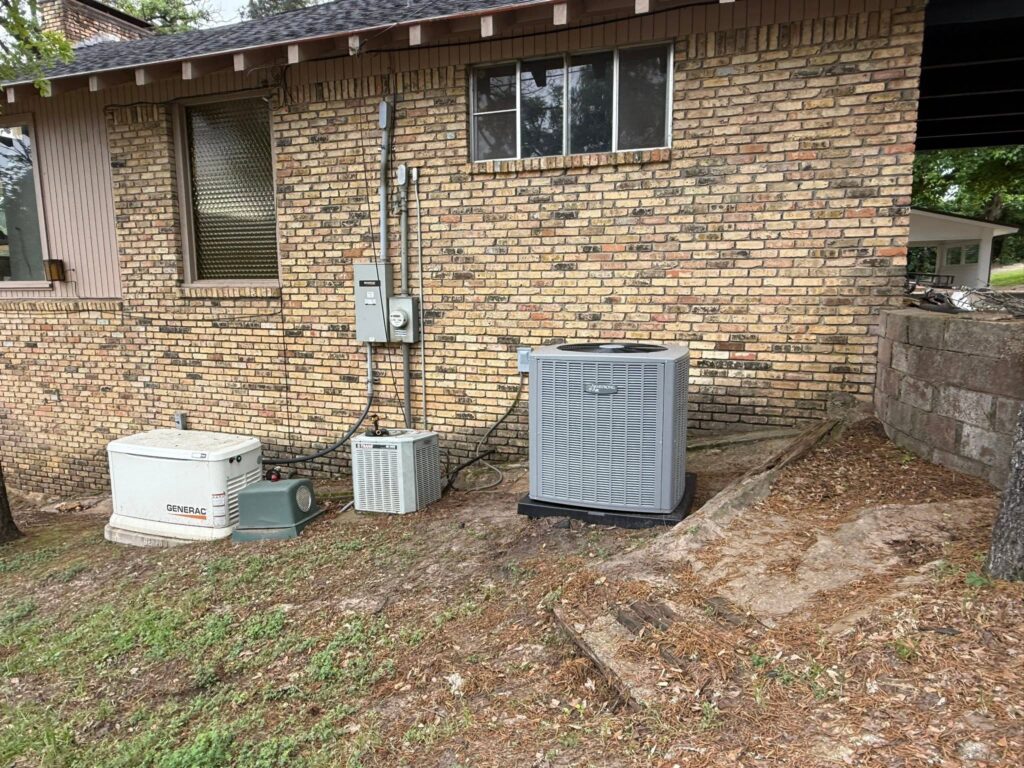
Thermostat configuration causes far more cold air complaints than most homeowners expect, and the problem has grown as smart thermostats have taken over the market. A heat pump uses a reversing valve to switch between heating and cooling, and that valve is controlled by a single wire that the thermostat energizes at the appropriate time. On the majority of residential systems that wire lands on the O terminal and gets energized during cooling operation, while certain manufacturers, notably Rheem and Ruud, use a B terminal that gets energized during heating instead. If a new thermostat is configured for the wrong convention, the system will run beautifully in one mode and produce exactly the opposite of what you asked for in the other. Homeowners in this situation often report that the air conditioning worked perfectly all summer and the heat has never worked since, which is a textbook signature of an O and B configuration error. A technician can confirm this in minutes with a meter and correct the thermostat setup without touching the equipment outside.
Simpler settings deserve a check before you assume anything is broken with the equipment itself. Confirm the mode selector actually reads HEAT rather than COOL or AUTO, since an AUTO setting with a narrow deadband will call for cooling on a warm afternoon and heating overnight in ways that feel random. Set the fan to AUTO rather than ON, because a fan left in the ON position runs continuously and pushes room temperature air through the ducts between heating cycles, and room temperature air moving across your skin feels cold even when nothing is wrong. Verify the temperature setpoint sits several degrees above the current indoor reading, since a system that has already satisfied the call has no reason to produce heat. Replace weak batteries in a battery powered thermostat, as low voltage produces erratic behavior that mimics equipment failure. Also confirm the system was not left in Emergency Heat from a previous season, which changes how the equipment stages and drives your bill up considerably.
Screen displays and installer menus matter as well, particularly on systems with auxiliary heat lockouts and outdoor temperature sensors. Some thermostats include a compressor lockout setting that prevents the heat pump from running below a chosen outdoor temperature, and a value entered incorrectly can leave you with nothing but strip heat or nothing but cool air moving through the house. Others include a minimum runtime or a compressor protection delay that keeps the outdoor unit off for five minutes after a power interruption, which explains cool air right after a storm or a breaker reset. If your thermostat was replaced recently by anyone other than a heat pump technician, the configuration deserves a full review rather than a guess. We see wiring shortcuts where the reversing valve wire was landed on the wrong terminal, jumped incorrectly, or left disconnected entirely. Want a thermostat installed and configured correctly for your heat pump? Click here for our thermostat service.
Mechanical Failures That Leave a Heat Pump Blowing Cold Air
When settings check out and the cold air persists for more than a few minutes at a time, attention moves to the outdoor equipment where the actual heating work happens. A stuck reversing valve is the classic mechanical cause, and it happens when the valve body sticks mechanically or the solenoid coil that shifts it fails electrically. In that condition the system continues to run air conditioning in the middle of January while the thermostat calls for heat, and the house gets colder the longer the unit operates. A technician diagnoses this by checking voltage at the solenoid and comparing line temperatures on both sides of the valve, which separates an electrical fault from a mechanical one. An electrical failure of the coil is a modest repair, while a valve body that has seized internally requires brazing in a replacement and recovering the refrigerant charge. Either way the diagnosis needs to be certain before parts are ordered, because guessing on this component gets expensive quickly.
Low refrigerant charge produces a different but equally frustrating version of the same complaint. A heat pump absorbs heat from outdoor air using refrigerant, and a system running short on charge because of a leak simply cannot move enough heat to warm your home. The supply air comes out lukewarm or cool, the outdoor coil frosts heavily and struggles to clear during defrost, and the compressor runs far longer than it should while your auxiliary heat carries the load. Refrigerant is not consumed during normal operation, so a low charge always means a leak exists somewhere in the coils, the line set, or a connection point. Simply adding refrigerant without locating and repairing that leak is a temporary patch, not a repair, and federal rules under EPA Section 608 govern how certified technicians handle these refrigerants. We locate the leak, repair or replace the failed component, evacuate the system properly, and weigh in a factory specified charge so the equipment performs the way it was designed to.
Electrical component failures round out the list and often produce the most confusing symptoms. A failed run capacitor can leave the compressor humming without starting, a burned contactor can prevent the outdoor unit from receiving power at all, and a tripped breaker at the outdoor disconnect leaves the indoor blower circulating unheated air throughout the house. In each of those cases the vents still deliver airflow, which is exactly why homeowners describe the problem as cold air rather than no heat. A failed defrost board is another frequent find, allowing ice to build on the outdoor coil until the unit is buried and airflow across the coil stops completely. Compressor failure represents the most serious outcome, and it usually announces itself with loud noise, repeated breaker trips, or a unit that draws heavy amperage and shuts down. Turning the system off and calling for service protects the rest of the equipment when any of these symptoms appear.
What to Check First When Your Heat Pump Is Blowing Cold Air
Before you schedule service, a short walkthrough of a few basic items resolves a meaningful share of cold air calls and gives a technician useful information when it does not. Start indoors with the filter and the registers, move outside to the condensing unit, and finish at the electrical panel and the thermostat. Everything in this section is safe for a homeowner to perform without tools, without removing panels, and without touching refrigerant lines or electrical terminals. If any of these checks reveals ice, burning smells, repeated breaker trips, or water in places it does not belong, stop and call for help rather than continuing. Documenting what you find, including outdoor temperature and how long the cold air lasts, shortens the diagnostic time considerably. Airflow problems and outdoor unit obstructions are the two issues we correct most often, and both are entirely preventable with routine attention.
Check Your Air Filter and Airflow When Your Heat Pump Blows Cold Air
Restricted airflow is the quiet cause behind an enormous number of heat pump complaints, and the air filter is where that restriction usually starts. A heat pump depends on a steady volume of air moving across the indoor coil to pick up heat and carry it into your living space, and a clogged filter starves that process. Supply air temperature drops, the system runs longer to reach setpoint, and the reduced heat transfer eventually shows up as poor performance you can feel at the register. In heating mode a badly restricted filter can also raise head pressure and stress the compressor, which turns a five dollar maintenance item into a major repair over time. Check the filter every month during heavy use and replace it at least every ninety days, sooner if you have pets, allergies, or ongoing construction dust. Choose a filter with a MERV rating your equipment can actually handle, because an overly dense filter creates the same restriction as a dirty one.
Registers and returns need attention too, and this is where well meaning homeowners create their own problems. Closing vents in unused rooms does not save energy on a residential system with a fixed speed blower; it raises static pressure across the whole duct system and reduces total airflow. Furniture pushed against a return grille, rugs covering floor registers, and boxes stacked in a closet that houses the air handler all produce measurable restriction. Walk the house and confirm every supply register is open and unobstructed and every return grille has clear space in front of it. While you are checking, hold your hand at a few different registers and compare the airflow, because a room with noticeably weak delivery often points to a disconnected or crushed duct run in the attic.
Duct condition deserves a mention because leaky ductwork in a hot attic wastes heat before it ever reaches you. Ducts that have separated at a connection, lost insulation, or developed tears will pull cold attic air into the supply stream and dump conditioned air into unconditioned space. The result is air at the register that feels cool even though the equipment is producing proper supply temperatures at the air handler. Older homes around Longview, Kilgore, and Gladewater frequently have duct systems that have never been sealed or inspected since installation. A technician can measure temperature at the equipment and at the register to identify exactly how much heat the distribution system is losing. Want to know if your ductwork is stealing heat before it reaches your rooms? Click here for our air duct service.
Inspect the Outdoor Unit When Your Heat Pump Blows Cold Air
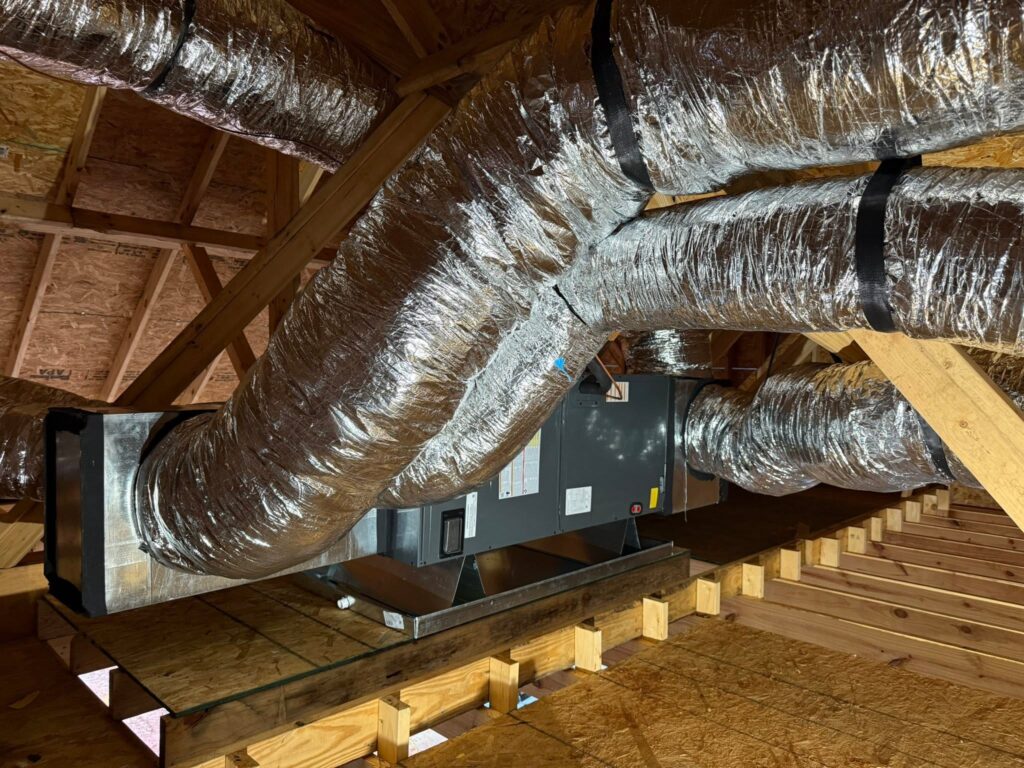
The outdoor unit does the heavy lifting in heating mode, and it needs unrestricted airflow across the coil to absorb heat from the outside air. Walk out and look at the condenser with the system running, then note three things: is the fan spinning, is the coil clear, and is there ice on the unit. A heat pump running in heating should have a cold coil and a running fan, and light frost on the coil surface in damp cold weather is normal between defrost cycles. What is not normal is a solid sheet of ice covering the coil, ice packed into the base pan, or an ice shell that has grown up around the fan grille. Heavy ice indicates a defrost failure, a refrigerant problem, or a drainage issue that lets water refreeze around the cabinet. Never chip at ice with a screwdriver, hammer, or any other tool, because the coil fins and refrigerant tubing puncture easily and turn a repair into a replacement.
Clearance and cleanliness matter year round and cost nothing to maintain. Keep at least two feet of open space on all sides of the unit and several feet of vertical clearance above it so discharge air is not recirculated back into the coil. Clear away leaves, pine straw, grass clippings, and the debris that collects along the bottom of the cabinet through the fall. Trim back shrubs and vines that have grown against the sides, and pay attention to anything above the unit that drips onto it, because a leaking gutter or a roof valley pouring water onto a heat pump in freezing weather builds ice fast. Confirm the unit sits level on its pad, since a settled or tilted pad interferes with condensate drainage during defrost and lets water pool where it will refreeze. These small items make a real difference in how well the equipment performs during the coldest stretches of the year.
Electrical checks round out the outdoor walkthrough and stay within safe territory for a homeowner. Locate the disconnect box mounted on the wall near the unit and confirm the handle or pull block is fully seated in the on position. Check the breaker panel inside for a tripped breaker on the heat pump circuit, and reset it once if you find one. If that breaker trips again, leave it off and call for service, because repeated trips signal a short, a failing compressor, or a ground fault that will get worse with every attempt. Listen for what the unit is doing as well, since a loud hum without fan rotation typically points to a failed capacitor and complete silence points to a contactor or control power problem. Report exactly what you observed when you schedule service, because those details often let a technician arrive with the right part already on the truck.
Know When to Use Emergency Heat If Your Heat Pump Blows Cold Air
Emergency heat exists for exactly the situation described in this article, and knowing how to use it correctly keeps your home livable while you wait for a repair. On an electric system, emergency heat bypasses the outdoor unit entirely and runs electric resistance heat strips inside the air handler to warm your home. On a dual fuel system, it switches over to the gas furnace instead. Either way it is a backup, not a substitute, and it costs substantially more to operate than the heat pump it replaces. Electric strip heat converts electricity to heat at roughly a one to one ratio, while a heat pump in mild East Texas weather typically delivers two to three times more heat per unit of electricity consumed. That efficiency gap is exactly why a system stuck in emergency heat for a month produces a power bill that shocks people.
Use emergency heat when the outdoor unit is iced solid, when it is not running at all, when it is tripping the breaker, or when a technician has told you to keep the compressor off until a repair is completed. Switch the thermostat from HEAT to EM HEAT or Emergency Heat depending on how your control labels it, and leave the setpoint where you normally keep it rather than raising it dramatically. Do not run emergency heat as a permanent workaround simply because the house feels warmer that way, since the underlying failure is still there and the cost adds up daily. Auxiliary heat is a related but different function, engaging automatically alongside the heat pump on very cold days and during defrost without any action from you. Seeing AUX on your thermostat during a twenty five degree morning is normal and does not mean the equipment has failed.
There is one more scenario worth knowing about, and it involves supply air temperature expectations rather than equipment failure. A working heat pump typically delivers supply air somewhere in the range of eighty five to ninety five degrees, roughly twenty to thirty degrees warmer than the return air entering the system. Skin temperature sits near ninety eight degrees, so air at ninety degrees genuinely feels cool against your hand even though it is heating the house effectively. Homeowners moving from a gas furnace, which delivers air closer to one hundred twenty degrees, almost always describe their new heat pump as blowing cold air during the first season. Longer, gentler run cycles are how a heat pump is supposed to operate, and a room that holds temperature comfortably is the measure that actually matters. If the house is not holding temperature and the run times never end, that is the point at which a service call is warranted.
Why You Need a Professional Heat Pump Repair When Your System Blows Cold Air
Homeowner checks resolve filters, settings, obstructions, and breaker issues, and those account for a good number of cold air calls each fall. Everything past that point involves refrigerant, high voltage, sealed system components, and control boards that require training, instruments, and certification to diagnose safely. Guessing on a heat pump is expensive, because the wrong part replaced on a sealed system means recovering refrigerant, brazing, evacuating, and recharging all over again. R.C.’s A/C Reliable Climate has been diagnosing and repairing heat pumps across Longview, White Oak, Hallsville, Marshall, and the surrounding communities for years, and our technicians know these systems inside and out. We hold Texas HVAC License number TACLA129043C, we carry full insurance, and we back our work with a ten year parts warranty and a one year labor warranty. When your heat pump blows cold air on the coldest morning of the year, we answer the phone.
Professional Repairs That Fix a Heat Pump Blowing Cold Air
Our diagnostic process starts with the symptom you describe and moves methodically through the system rather than jumping to a conclusion. We verify thermostat configuration and reversing valve control voltage, check the O and B terminal setup against the equipment manufacturer, and confirm that the call for heat is reaching the outdoor unit as it should. From there we take refrigerant pressures and temperatures, evaluate superheat and subcooling against the manufacturer specification, and determine if the charge is correct for the conditions. Electrical testing covers the capacitor, contactor, defrost board, sensors, and compressor windings, since any one of them produces cold air in its own way. That structured approach means you pay for the repair your system actually needs.
Common repairs we complete include reversing valve solenoid replacement, full valve body replacement, defrost board and sensor replacement, capacitor and contactor replacement, refrigerant leak repair with proper evacuation and recharge, and auxiliary heat strip and sequencer replacement. Each of those has a distinct symptom pattern, and matching the symptom to the correct component is the entire value of a professional diagnosis. We carry common parts on our trucks so a large share of repairs finish on the first visit. When a part must be ordered, we tell you the timeline honestly and help you stay comfortable in the meantime. Our technicians explain what failed and why it failed rather than handing you a total and leaving.
Honest recommendations sit at the center of how we operate, and that includes telling you when a repair makes more sense than a replacement. Plenty of companies use a cold air complaint as an opening to sell a new system, and we take a different approach. If your equipment is ten years old with a failed capacitor, you get a capacitor. If your compressor has failed on a twenty year old system with an obsolete refrigerant, we lay out the real numbers on both paths and let you decide. Free estimates on new installations and financing options make that decision easier when replacement genuinely is the better investment.
Maintenance That Prevents a Heat Pump From Blowing Cold Air
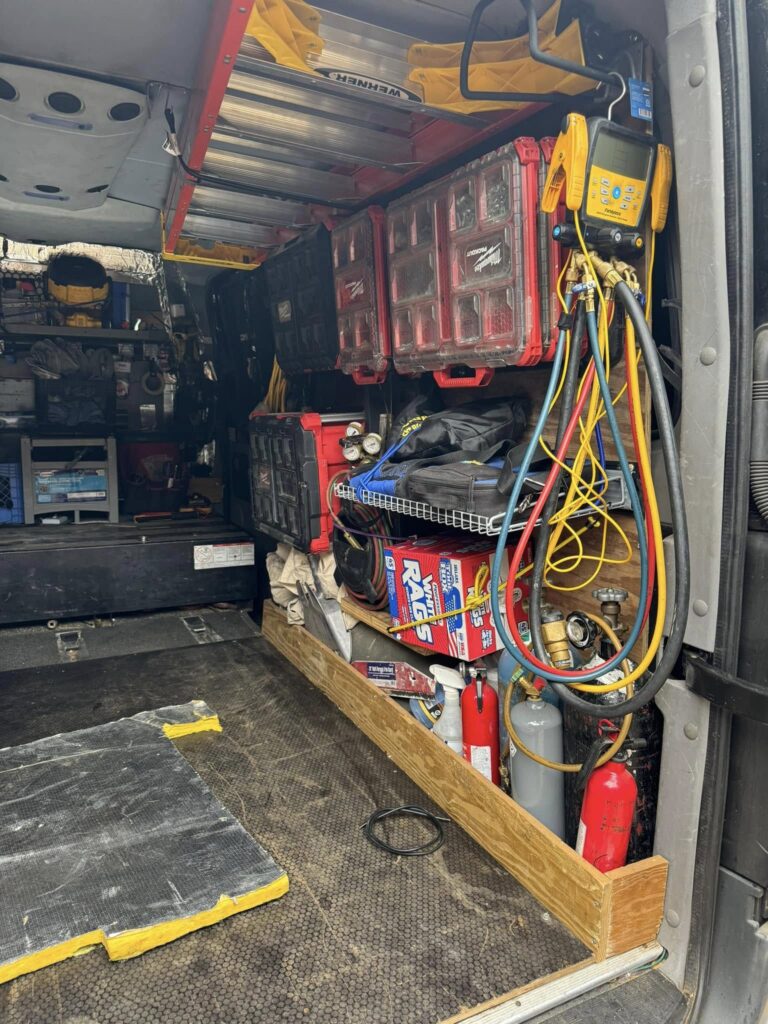
Most of the failures described in this article develop gradually and can be caught during routine maintenance well before they leave you without heat. A heat pump runs year round in East Texas, cooling all summer and heating all winter, which means it accumulates roughly twice the runtime of a system paired with a gas furnace. That workload makes seasonal maintenance more important, not less, and skipping it shortens equipment life measurably. Our maintenance visits include coil cleaning, refrigerant charge verification, electrical connection tightening, capacitor testing, defrost cycle verification, and full airflow and temperature measurement. Catching a weak capacitor in October costs a fraction of an emergency call in January.
Defrost operation is one of the specific items we test during a fall visit, since a defrost board or sensor that has quietly failed will not reveal itself until the first frosty morning. We also verify that auxiliary heat strips energize during defrost as designed, which is the difference between a barely noticeable cycle and cold air blasting through your house. Refrigerant charge gets checked against factory specification rather than by feel, because a system slightly low on charge performs acceptably in mild weather and fails badly when temperatures drop. Airflow measurements catch duct restrictions and blower issues before they cause coil freezing or compressor damage.
Scheduling maintenance in early fall gives you time to address anything we find before you actually need the heat. We work throughout Longview, Kilgore, Gilmer, Gladewater, Liberty City, Lakeport, White Oak, Hallsville, and Marshall, and we keep our scheduling flexible enough to fit real life. Emergency service is available around the clock for the situations that cannot wait until morning. Preventive care consistently costs less than reactive repair, and it keeps your energy bills where they belong by holding efficiency near the level the equipment was designed to deliver.
Why Choose R.C.’s A/C Reliable Climate When Your Heat Pump Blows Cold Air
We are locally owned and operated right here in Longview at 3 Lewis Drive, and East Texas is where our technicians live and work. That matters because heat pump performance in this climate has its own particular characteristics, from high winter humidity that drives frequent defrost cycles to summer heat that pushes equipment hard for months on end. We understand how systems behave here, what fails first, and what actually needs to be replaced versus what has plenty of service life left. Our reputation is built on honest recommendations with no unnecessary upsells, and we intend to keep it that way. Every technician who comes to your home works under Texas HVAC License number TACLA129043C.
Our service covers the full range of residential and commercial equipment, including heat pumps, air conditioning, furnaces, mini split systems, thermostats, ductwork, walk in coolers, walk in freezers, and prep table refrigeration. We back installations with a ten year parts warranty and a one year labor warranty, and we offer financing so a major repair or replacement does not have to wait. Free estimates on new installations mean you can get real numbers before committing to anything. We are fully licensed and insured, and we treat your home with the care we would want in our own.
When your heat pump is blowing cold air and you need a straight answer, call R.C.’s A/C Reliable Climate at 903-316-6855 or email info@iwantclimate.com. We provide emergency service twenty four hours a day, seven days a week, because heating failures rarely happen at convenient times. Our commitment to five star service shows up in how we diagnose, how we explain, and how we follow through after the repair is finished. Reach out today and get your heat pump back to doing exactly what it was built to do.