
Signs Your Heating System Needs Attention Before Winter
East Texas winters arrive in short, sharp bursts, and the first real cold front usually shows up before most homeowners have tested their heat. A furnace or heat pump that sat idle through a long Longview summer does not always wake up the way it should, and the parts that failed quietly in July give no warning until the thermostat calls for heat. Small problems that went unnoticed last March tend to grow through the warm months, then surface as a no heat call on the coldest night of the year. The good news is that heating equipment almost always warns you first, and those warnings are easy to read once you know what they mean. Odd sounds, uneven room temperatures, a burner that struggles to light, and a power bill that climbs for no clear reason are all messages from a system under strain. Catching those signals in September or October gives you time to schedule a repair on your own terms instead of waiting in a cold house for an emergency visit. This guide walks through the warning signs that matter most, explains what each one usually means inside the equipment, and shows you where the line sits between a simple fix and a serious safety issue.
Early Signs Your Heating System Needs Attention Before Winter
The first cold morning is a test your heating system either passes or fails, and most systems that fail that test were sending signals for weeks beforehand. Homeowners across Longview, Gilmer, and Hallsville describe the same pattern every fall; the heat still runs, but something feels off long before it quits entirely. Noise, airflow, and energy use are the three areas where trouble shows up earliest, and they are also the three areas a homeowner can monitor without any tools. Each category points to a different mechanical or electrical problem, and each one grows worse with every hour of runtime that passes. A blower bearing that squeals in October will seize in January, and a restricted duct system that trips a limit switch once will trip it repeatedly as temperatures drop. Paying attention to these early signs keeps a minor repair from becoming a full replacement in the middle of a hard freeze.
Strange Noises Are a Sign Your Heating System Needs Attention
Heating equipment makes predictable sounds when it is healthy, and any new noise is worth investigating. A soft click followed by a smooth whoosh of air is normal on a gas furnace, since that is the ignitor energizing and the blower ramping up after the burners prove flame. A loud boom or a delayed thump at startup is not normal, and it usually means gas is pooling in the burner compartment before it lights. That condition is called delayed ignition, and it is caused by dirty burners, a weak ignitor, or misadjusted gas pressure. Left alone, those small explosions stress the heat exchanger and can crack the metal over time. Rattling panels are far less serious and often just need screws tightened, but a rattle can also come from a loose blower wheel or a failing inducer motor. Sorting the harmless sounds from the dangerous ones is the first step in knowing how quickly you need service.
Squealing and grinding point directly at the blower assembly, and both deserve immediate attention. A high pitched squeal on startup usually comes from worn motor bearings or a slipping belt on older equipment with a belt driven blower. Grinding or metallic scraping means something is physically contacting the blower wheel, which happens when the wheel loosens on the shaft or when the motor bearings wear far enough to let the assembly drop out of alignment. Running a furnace in that condition risks destroying the blower housing and burning up the motor, and a replacement motor in the middle of winter costs far more than a bearing service in the fall. A steady electrical hum with no air movement points somewhere else entirely, usually a failed run capacitor or a stuck contactor. Any hum that continues while the system fails to start should prompt you to shut the equipment off at the thermostat and call for service. Continuing to cycle a system that hums and stalls will overheat the motor windings and turn a small part failure into a full component replacement.
Heat pumps produce their own set of noises, and East Texas has plenty of them since the climate suits them well. A short whoosh or a metallic clunk when the system switches between heating and cooling is the reversing valve shifting position, and that sound is normal. A continuous hissing or bubbling near the indoor coil is not normal, and it often signals a refrigerant leak that will leave you short on heat once outdoor temperatures fall. Screeching from the outdoor unit points at compressor trouble and calls for a shutdown until a technician inspects it. Loud vibration from the outdoor cabinet frequently traces back to loose mounting hardware or a fan blade that has gone out of balance. Every one of these sounds gets louder and more expensive as the season progresses, so early diagnosis pays for itself. Hearing something new from your furnace and want to know what it means? Click here for our furnace service and repair page.
Weak Airflow Is a Sign Your Heating System Needs Attention
Airflow is the quiet foundation of every heating system, and a restriction anywhere in the path causes problems everywhere else. The most common culprit is a dirty filter, since a filter that went unchanged through summer will be loaded with dust, pollen, and pet dander by the time heating season begins. A clogged filter starves the blower, drives up static pressure, and traps heat inside the furnace cabinet. That trapped heat trips the high limit switch, which shuts the burners down while the blower keeps running, so you feel cool air coming from your vents. Homeowners often mistake that symptom for a broken furnace when the actual fix costs a few dollars. Filters in a Longview home generally need replacement every one to three months, and homes with pets or nearby construction need them more often. Checking the filter before the first cold snap is the single easiest maintenance task a homeowner can perform.
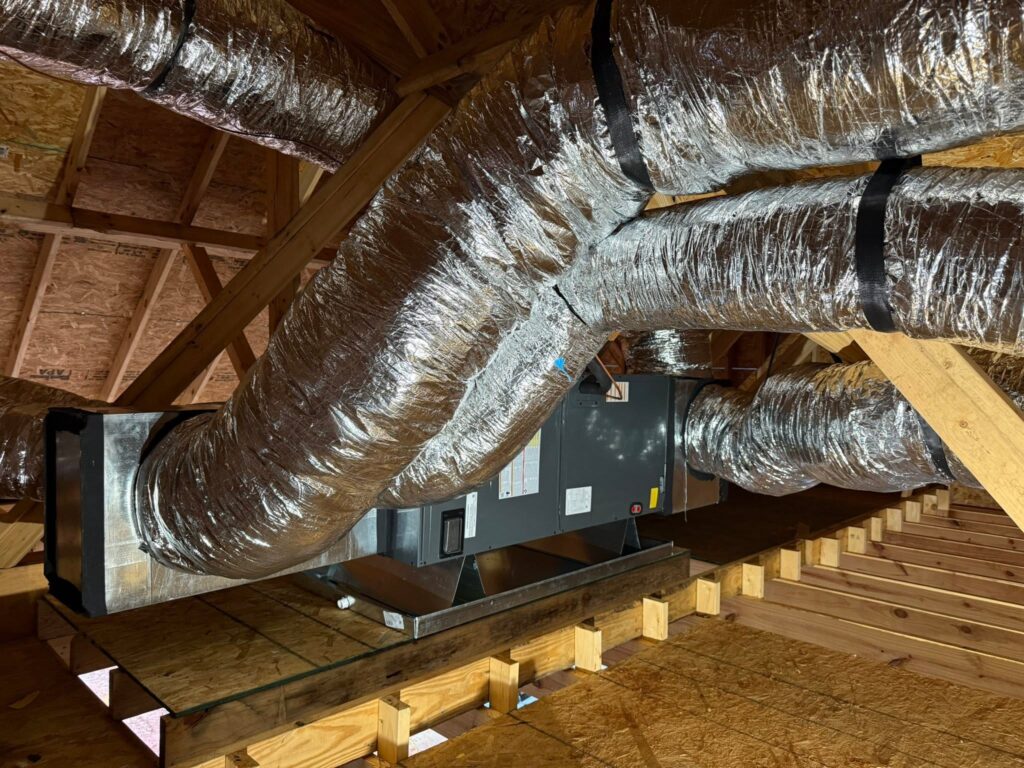
Duct problems create the same weak airflow symptoms even when the equipment itself works perfectly. Most homes in this area run flexible ductwork through an unconditioned attic, and those runs sag, crush, and disconnect over the years. A single duct that has pulled loose from its boot will dump heated air into the attic while the room below stays cold no matter how long the system runs. Crushed returns are just as damaging, since a system that cannot pull air in cannot push air out. Leaky duct seams also draw dusty attic air into the airstream, which fouls the coil and the blower wheel and reduces capacity further. Rooms that never reach the thermostat setting, vents that barely move a tissue, and a system that runs constantly all point toward the duct system rather than the furnace. Suspect your ducts are the real problem? Click here to learn about our air duct services.
The blower motor itself is the third place airflow trouble hides, and it fails in stages rather than all at once. Older permanent split capacitor motors slow down as their capacitors weaken, so the system moves less air every season without ever throwing an error. Variable speed motors behave differently, since they ramp up automatically to overcome added resistance and mask a growing restriction until the electronics finally fault out. In both cases the equipment burns more electricity to move less air, and comfort suffers throughout the house. A technician measuring static pressure can tell you within minutes if the blower is fighting the duct system or simply losing strength. That measurement also reveals restrictions hidden behind walls that no visual inspection would ever find. Correcting airflow before winter protects the heat exchanger, extends motor life, and eliminates the cold room complaints that show up every January.
Rising Energy Bills Are a Sign Your Heating System Needs Attention
A power bill that climbs without a matching change in weather is one of the most reliable signs of a heating system in decline. Efficiency losses happen gradually, so the system keeps producing heat while burning more fuel or drawing more electricity to do it. Dirty burners, a soot covered heat exchanger, and a fouled indoor coil all reduce heat transfer, which forces longer run cycles to hit the same thermostat setting. Longer cycles mean more blower runtime, more gas consumption, and more wear on every moving part in the system. Comparing this fall’s bills against the same months last year gives you a rough baseline, and any jump beyond ten or fifteen percent deserves a look. Weather changes account for some variation, so use temperature trends as context rather than dismissing the increase outright. A tune up that restores heat transfer often pays for itself across a single heating season.
Heat pump owners have an additional variable to watch, and that variable is auxiliary heat. Electric resistance heat strips consume far more electricity than the heat pump itself, and they exist as a supplement for the coldest hours rather than a primary heat source. A heat pump that runs its strips constantly is either low on refrigerant, struggling with a defrost fault, or being told to do so by a miswired or misconfigured thermostat. East Texas winters are mild enough that a properly charged heat pump should carry most of the load on its own. If your bill spikes the moment cold weather arrives, auxiliary heat is the first thing a technician will investigate. Many homeowners also trigger the strips accidentally by raising the thermostat several degrees at once, since a large jump in setpoint calls for supplemental heat automatically. Smaller thermostat adjustments and a properly programmed schedule keep those strips off and keep the bill down.
The building envelope deserves equal attention, since even a perfect heating system cannot overcome a house that leaks heat faster than it can produce it. Attic insulation settles and compresses over the decades, and many older homes in Gladewater, Kilgore, and White Oak sit well below current recommended levels. Gaps around recessed lights, attic hatches, and plumbing penetrations act as chimneys that pull warm air straight out of the living space. Weatherstripping on exterior doors compresses and tears, and window seals fail without any visible sign. Addressing these issues costs less than most equipment repairs and reduces the load on the system permanently. A technician performing a heating inspection will often spot envelope problems while working in the attic and can tell you which fixes deliver the most benefit. Combining envelope improvements with a properly serviced system produces savings that compound every year you stay in the home.
Safety and Performance Signs Your Heating System Needs Attention Before Winter
Some warning signs point toward comfort problems, and others point toward genuine safety hazards that need immediate action. Combustion equipment burns fuel inside your home, so anything that disrupts that process deserves serious respect rather than a wait and see approach. Burner behavior, cycling patterns, and defrost operation all reveal what is happening inside the equipment that you cannot see from the hallway. These signs also tend to appear together, since a system fighting one problem usually develops several. A furnace that short cycles will foul its flame sensor faster, and a heat pump that cannot complete a defrost cycle will run its backup heat until something fails. Knowing what each pattern means helps you communicate clearly with your technician and helps you decide how urgently the visit needs to happen.
Burner and Pilot Problems Signal a Heating System That Needs Attention
Watching your furnace light is one of the most informative things a homeowner can do, and it takes less than a minute. A healthy gas flame burns steady and blue with a small amount of light yellow at the tip, and it holds that shape throughout the cycle. Flames that are mostly yellow, that flicker heavily, or that lift away from the burner surface indicate incomplete combustion. Incomplete combustion produces carbon monoxide, wastes fuel, and deposits soot on the heat exchanger where it blocks heat transfer. The cause is usually dirty burners, a restricted flue, or inadequate combustion air reaching the equipment closet. A furnace that lights, runs briefly, then shuts down and tries again is often dealing with a dirty flame sensor, which is a thin metal rod that confirms flame is present. Cleaning that sensor is routine maintenance, and it resolves a large percentage of the nuisance shutdowns that technicians see every fall.
A cracked heat exchanger sits at the top of the list of serious furnace problems, and it is the reason combustion inspections matter so much. The heat exchanger separates combustion gases from the air circulating through your home, and a crack in that metal allows those gases to mix with the air you breathe. Symptoms can include flames that flutter or roll when the blower starts, soot accumulation around the burner compartment, and a persistent odor when the furnace runs. Headaches, nausea, and drowsiness that improve when you leave the house are far more urgent signs and warrant leaving immediately and calling for help. Every home with gas appliances needs working carbon monoxide detectors on each floor and near sleeping areas, and those detectors need fresh batteries before heating season begins. A technician inspects the heat exchanger visually and with combustion analysis, and a confirmed crack means the furnace gets shut down until it is replaced. This is not a repair to defer, and no reputable contractor will tell you otherwise.
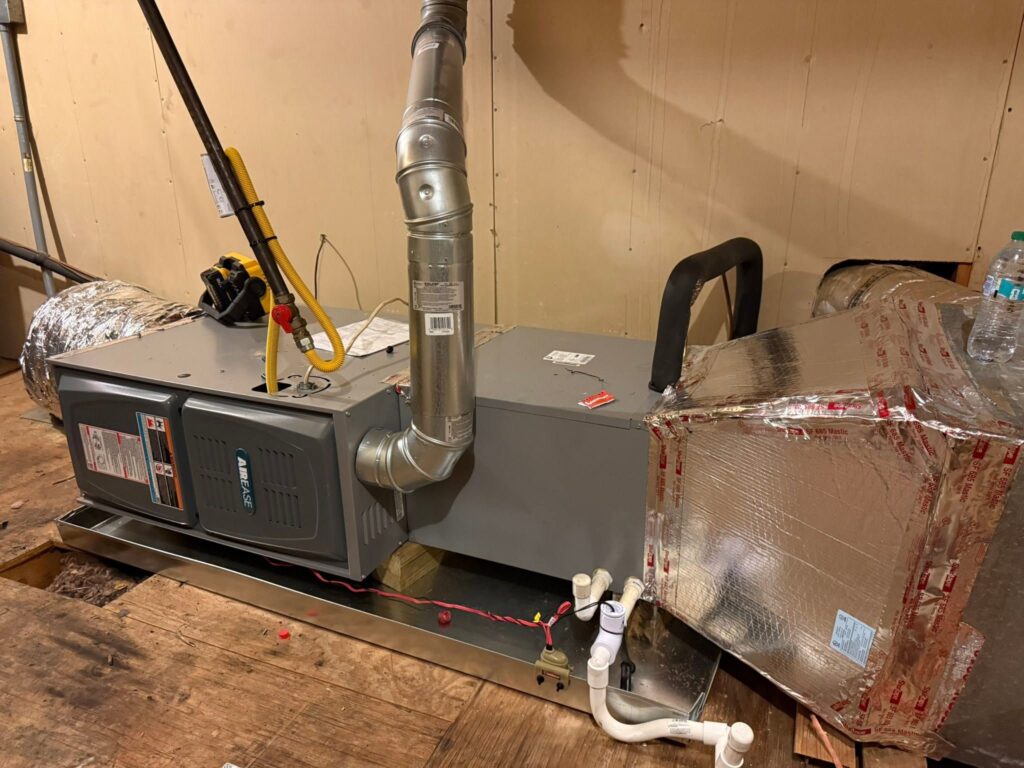
Venting and drainage complete the combustion picture, and both fail in ways that stop the furnace cold. The pressure switch confirms that the inducer motor is pulling combustion gases out through the flue, and it prevents the burners from lighting when that draft is missing. Bird nests, wasp nests, and debris routinely block flue terminations over the summer, and a blocked flue is exactly what that switch is designed to catch. Condensing furnaces add another failure point, since they produce acidic condensate that drains through a trap and a drain line. Algae and sediment clog those lines, the water backs up, and a safety switch shuts the system down before damage occurs. Clearing the drain and inspecting the flue takes a technician a few minutes during a maintenance visit, and skipping it produces a no heat call at the worst possible time. Both items are standard on any thorough fall heating inspection.
Short Cycling Signals a Heating System That Needs Attention Before Winter
Short cycling describes a heating system that starts, runs for a brief period, shuts down, and restarts again within a few minutes. Normal cycles in cold weather typically last ten to fifteen minutes or longer, so anything consistently shorter than that signals a problem. The most frequent cause is overheating inside the furnace cabinet, which trips the high limit switch and cuts the burners. Restricted airflow from a dirty filter, closed supply registers, or blocked returns creates that overheating condition. Homeowners sometimes close vents in unused rooms believing it saves money, but that practice raises static pressure and starves the system of the airflow it needs. Reopening those vents and installing a clean filter resolves a surprising number of short cycling complaints without any parts at all.
Thermostat issues create the same symptom through a completely different mechanism. A thermostat mounted on an exterior wall, in direct sunlight, or above a supply register reads a temperature that does not represent the rest of the house, so it satisfies and calls for heat erratically. Loose wiring at the thermostat terminals or at the control board produces intermittent signals that start and stop the equipment unpredictably. Heat pump systems are especially sensitive to configuration, since the reversing valve terminal must be set correctly for the equipment brand and the staging settings must match the installed hardware. A thermostat installed by a previous owner or replaced without proper setup often runs auxiliary heat far more than it should. Getting the thermostat right improves comfort and lowers operating cost at the same time. Need a thermostat that actually matches your system? Click here for our thermostat installation and service options.
The damage from short cycling accumulates faster than most homeowners realize. Every startup places the highest electrical and mechanical stress of the entire cycle on the ignitor, the inducer motor, the blower motor, and the compressor. A system cycling four times an hour experiences several times the wear of one running normal length cycles, and component life shortens accordingly. Efficiency drops as well, since equipment reaches peak efficiency only after it has been running for several minutes. Comfort suffers throughout the house because short bursts of heat never fully distribute through the duct system, leaving some rooms warm and others cold. Correcting the underlying cause protects the equipment and restores even temperatures at the same time. A technician can identify the source during a single visit by measuring airflow, checking limit operation, and verifying thermostat configuration.
Heat Pump Defrost Problems Signal a Heating System That Needs Attention
Heat pumps are common throughout East Texas because our winters suit them, and understanding defrost operation prevents a lot of unnecessary service calls. When a heat pump runs in heating mode, the outdoor coil gets colder than the surrounding air, and moisture in that air condenses and freezes on the coil surface. Light frost is completely normal and expected during cold, damp weather. The system periodically reverses itself into cooling mode, shuts off the outdoor fan, and sends hot refrigerant through the outdoor coil to melt that frost away. Steam rising off the outdoor unit during this process is normal and often alarms homeowners who think the unit is burning. A defrost cycle typically lasts a few minutes, after which the system clunks back into heating mode and continues normally.
Trouble begins when the ice stops melting away. A coil encased in solid ice, ice building on top of the unit, or frost that remains for hours all point to a defrost failure. The defrost board, the defrost sensor, and the reversing valve are the usual suspects, and low refrigerant charge produces the same symptom by dropping coil temperatures below normal. Poor drainage under the outdoor unit contributes as well, since meltwater that cannot escape refreezes and builds up around the base pan. Running a heat pump under heavy ice risks damaging the outdoor fan blade and stressing the compressor with liquid refrigerant. Turning the system to emergency heat and calling for service protects the equipment while you wait. Seeing ice on your outdoor unit? Click here for our heat pump repair and service information.
Auxiliary heat operation tells you a great deal about heat pump health during the shoulder season. Most thermostats display an auxiliary or emergency heat indicator, and that indicator should stay dark during mild fall weather. Strips that energize at fifty degrees outdoors point toward low refrigerant, a dirty outdoor coil, a failing compressor, or a thermostat that is staging incorrectly. Homeowners frequently notice the problem first on their power bill rather than on their thermostat, since resistance heat costs several times more to operate. Checking the outdoor unit for leaves, grass clippings, and shrub growth is a simple homeowner task that improves performance immediately. Anything beyond that requires gauges and diagnostic tools, so early professional service in fall keeps the strips off through the coldest weeks ahead.
Why You Need Heating System Service Before Winter Arrives
Waiting for a failure is the most expensive way to manage a heating system. Emergency service during a hard freeze means longer wait times, cold nights, and repairs that could have been scheduled weeks earlier at a calmer pace. Fall service catches the small items while parts are readily available and while technician schedules still have room in them. It also gives you accurate information about the condition of your equipment, so any decision about repair or replacement happens with time to consider it. R.C.s A/C Reliable Climate serves homes and businesses throughout Longview, Marshall, Kilgore, Gladewater, White Oak, Gilmer, Hallsville, Lakeport, and Liberty City with heating inspections, repairs, and installations. Getting on the schedule now costs less and stresses you far less than making that call in January.
What a Heating System Service Before Winter Includes
A thorough fall heating service goes well beyond a quick look and a filter change. The technician inspects and cleans the burners, tests the ignitor and flame sensor, verifies gas pressure, and performs a combustion analysis to confirm the system is burning fuel safely and completely. The heat exchanger receives a careful inspection for cracks and corrosion, since that component protects everyone in the building. Electrical connections get tightened and tested, motor amperage gets measured against nameplate ratings, and safety switches are verified for proper operation. Every one of those checks catches a problem that would otherwise surface as a failure during cold weather.
Heat pump service follows a parallel process with different components. Refrigerant charge gets verified against manufacturer specifications, the reversing valve is tested in both directions, and the defrost cycle is initiated and observed from start to finish. Outdoor and indoor coils get cleaned so heat transfer happens efficiently, and the condensate drain gets cleared to prevent backups. Auxiliary heat strips are tested individually to confirm they energize when needed and stay off when they are not. The technician also confirms thermostat programming and staging so the system uses the least expensive heat source available at any given outdoor temperature.
Documentation is the part homeowners appreciate most after the fact. A written record of measurements, findings, and completed work gives you a baseline to compare against next year and supports any warranty claim you might need to file. Manufacturer warranties on most heating equipment require documented annual maintenance, and skipping it can void coverage on expensive components. The technician should also explain what was found in plain language and tell you which items need attention now versus which can wait. That kind of straight information lets you plan your budget instead of reacting to surprises.
When to Repair or Replace a Heating System Before Winter
Repair makes sense for most problems, and a well maintained furnace or heat pump commonly delivers fifteen to twenty years of service. Failed ignitors, capacitors, contactors, flame sensors, and blower motors are all routine replacements that restore full function at reasonable cost. Age alone does not condemn a system, and plenty of older equipment runs safely and efficiently with proper care. The question becomes more complicated once the repair cost climbs toward a significant share of replacement cost. Comparing the repair estimate against the remaining expected life of the equipment gives you a clear framework for the decision.
Certain findings shift the answer toward replacement regardless of age. A cracked heat exchanger, a failed compressor on an older heat pump, or a system that uses discontinued refrigerant all fall into that category. Repeated failures across multiple components within a single season signal a system nearing the end of its service life, since one repair tends to be followed by another. Rising energy bills that persist after a thorough tune up point the same direction. In those cases the money spent on repairs delivers no lasting return.
New equipment brings real advantages that go beyond avoiding breakdowns. Modern furnaces and heat pumps operate at efficiency levels that older equipment never reached, and variable speed technology delivers more even temperatures with quieter operation. R.C.s A/C Reliable Climate provides free estimates on new HVAC installations along with financing options that spread the cost into manageable payments. Every installation carries a ten year parts warranty and a one year labor warranty for protection you can count on. Sizing the replacement correctly matters more than the brand on the label, so a proper load calculation is part of every quote we provide.
Why Choose R.C.s A/C Reliable Climate for Heating System Service Before Winter
R.C.s A/C Reliable Climate is locally owned and operated right here in Longview, and we hold Texas HVAC License number TACLA129043C. We live in the same neighborhoods we serve, and our reputation travels by word of mouth across Gregg, Harrison, and Upshur counties. That reality shapes how we do business, because a shortcut taken today costs us a customer for life. Our technicians explain what they find, show you the evidence, and give you honest recommendations without unnecessary upsells. You get the information you need to make your own decision, and you never get pressured into work that your system does not require.
Availability matters just as much as honesty when heat fails on a freezing night. We offer emergency HVAC service around the clock, and we arrive with the parts and tools needed to solve most problems on the first visit. Our team handles residential heating alongside commercial refrigeration work, which means we understand equipment that has to run reliably no matter what the weather does. Restaurants, convenience stores, and offices across the area rely on us for the same responsiveness we bring to homes. That range of experience makes our technicians better diagnosticians in every setting.
Scheduling your heating inspection now is the simplest way to protect your comfort this winter. Reach us at (903) 316-6855 or by email at info@iwantclimate.com, and stop by our shop at 3 Lewis Drive in Longview, Texas. Ready to get your heating system inspected before the first cold front? Click here to see our Longview HVAC services and request a visit. We are dedicated to always providing five star service, and we look forward to keeping your home warm through every cold snap this season.