
Why Your Furnace Smells Strange When You First Turn It On
The first time you switch the thermostat over to heat each fall, your house often fills with an odor that was not there the day before. Most homeowners in Longview notice it within a minute or two of the furnace firing, and the reaction is almost always the same mix of curiosity and mild concern. In the majority of cases, that smell is nothing more than dust burning off a hot heat exchanger after the system sat idle through a long East Texas summer, and it clears on its own within a cycle or two. In a smaller number of cases, the odor is your furnace telling you something important about its burners, its wiring, its venting, or a gas connection that needs attention immediately. Knowing the difference protects your family, saves you money, and keeps a minor issue from turning into a failed heating system on the coldest night of the year. This guide breaks down the specific smells a furnace produces at startup, explains the mechanical reason behind each one, and tells you exactly when to shut the system down and call a licensed technician.
What Causes a Furnace to Smell Strange When You First Turn It On
A furnace generates heat by moving air across surfaces that reach very high temperatures, and anything sitting on those surfaces will react to that heat. Over the summer, dust, pet dander, pollen, and fine debris settle inside the cabinet, on the heat exchanger, in the blower compartment, and throughout the supply ducts. When the burners ignite for the first time in months, all of that accumulated material is heated at once and pushed through your vents along with the warm air. Moisture is the second major factor, since humidity in this part of Texas lingers in ductwork and around the evaporator coil that shares a cabinet with your furnace. The third factor is the equipment itself, because wiring insulation, motor windings, and control components produce distinct odors when they run hotter than they should. Sorting the harmless causes from the serious ones starts with identifying the smell and tracking how long it lasts.
The Dust Burn Off Smell When You First Turn On Your Furnace
The most common furnace odor at startup is a dry, slightly scorched smell that reminds people of burnt toast, a hot clothes iron, or a dusty attic. It happens because the surfaces of a heat exchanger climb to several hundred degrees within the first minutes of operation, and organic dust particles resting on that metal oxidize instantly. Your blower then pushes that odor through every supply register in the house, which is why the smell seems to arrive everywhere at the same time. The intensity is usually strongest during the very first heating cycle of the season and noticeably weaker by the second or third cycle. Homes with pets, carpet, or recent construction work tend to produce a stronger version of this smell simply because more material settled during the off season. There is nothing dangerous about the process itself, and the odor should disappear entirely within a few hours of runtime.
You can shorten the whole experience with a few simple steps taken before the first real cold front arrives. Install a fresh air filter, because a loaded filter holds months of trapped debris that will contribute to the odor every time air passes through it. Vacuum the supply registers and return grille with a brush attachment to remove the visible layer of dust sitting in the louvers. Open a few windows for twenty or thirty minutes and let the system run at a setting slightly above room temperature so the burn off happens on your schedule instead of at midnight in November. Running that controlled test in early fall also gives you a chance to confirm the furnace ignites, the blower engages, and the thermostat is communicating properly. If everything works and the smell clears, you are in good shape for the season ahead.
There is a point where dust related odor stops being normal, and that point is roughly a full day of operation. A smell that persists for several days, returns strongly at the beginning of every single cycle, or grows worse over a week usually means there is far more debris in the system than a fresh filter can address. Common culprits include a blower wheel caked with lint, a filter slot that allows unfiltered air to bypass the media, a return duct with an open seam pulling attic dust into the airstream, or supply ducts holding years of accumulated buildup. Duct leakage is especially common in older Gregg County and Harrison County homes where flexible duct has been crushed, disconnected, or damaged by rodents. Cleaning the blower assembly and sealing the duct system will typically eliminate the odor for good while improving airflow and lowering your energy use. Think your ductwork is holding onto dust and odors? Click here for our air duct services.
Musty and Moldy Furnace Smells When You First Turn It On
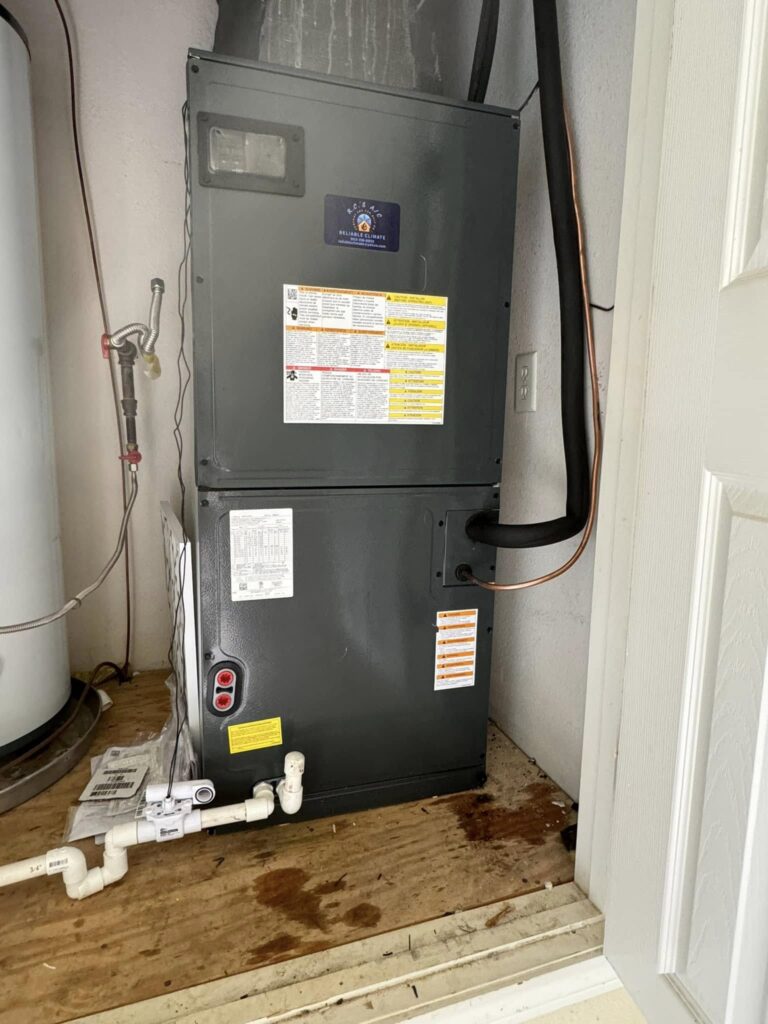
A damp, sour, locker room odor that appears the moment the blower starts is a completely different problem from dust burn off. This smell comes from microbial growth on wet surfaces inside the air handler or the duct system, and East Texas humidity gives that growth ideal conditions for months at a time. Your indoor evaporator coil sits directly in the airstream and stays wet through the entire cooling season as it removes moisture from your home. Any condensate that fails to drain properly collects in the drain pan, and standing water plus organic dust equals mold and bacteria. When you finally switch to heating, the blower moves air across those same contaminated surfaces and delivers the odor straight into your living space. The smell is usually strongest during the first minute of blower operation and may fade slightly as the ducts warm and dry.
Several conditions make musty furnace odors far more likely in this climate. A clogged condensate drain line is the most frequent offender, since algae and biological growth block the drain and allow water to sit in the pan for weeks. An oversized air conditioner contributes as well, because it satisfies the thermostat quickly and shuts down before removing enough humidity from the house. Duct leaks in an unconditioned attic pull hot, moist air into the system, and that moisture condenses on cool metal surfaces where it feeds mold growth. A dirty evaporator coil traps dust between the fins and holds moisture against the surface long after the cooling season ends. Homes with high indoor humidity, poor attic ventilation, or a history of roof leaks near the air handler are especially prone to this problem.
Correcting a musty odor requires cleaning the source rather than covering it with an air freshener. A technician should flush and treat the condensate drain line, clean the drain pan, and verify the pan drains completely with the proper slope. Deep cleaning the evaporator coil removes the biological film that produces most of the smell, and sealing accessible duct connections stops humid attic air from entering the system. Upgrading to a pleated filter in the MERV 8 to MERV 11 range captures more airborne spores and dust without restricting airflow the way a very dense filter can. Some systems benefit from a properly installed ultraviolet lamp aimed at the coil surface, which limits regrowth between service visits. Addressing indoor humidity through balanced airflow and correctly sized equipment prevents the entire cycle from repeating next year.
Burning Plastic and Electrical Furnace Smells When You First Turn It On
A sharp, acrid smell that reminds you of melting plastic, hot electronics, or an overheated hair dryer deserves an immediate response. That odor typically comes from wire insulation, a control board, a capacitor, or a motor winding running hotter than the manufacturer designed it to run. Blower motors that have collected dust or lost bearing lubrication draw excess current, heat up, and cook the varnish on their internal windings. Loose electrical connections create resistance at the contact point, and resistance produces heat that melts the surrounding insulation. Rodent damage is another frequent cause in this region, since mice chew through low voltage wiring and nest inside blower compartments during cool weather. None of these conditions improve on their own, and continuing to run the system risks damage to expensive components.
Restricted airflow creates a related version of the same problem and is one of the most preventable furnace failures we see. When a filter is clogged, when too many supply registers are closed, or when a return duct is undersized, not enough air passes across the heat exchanger to carry away the heat being produced. The heat exchanger surface temperature climbs beyond its design range, the high limit switch trips, and the burners shut down while the blower keeps running. Repeated overheating stresses the metal, shortens the service life of the heat exchanger, and can produce a hot metal odor throughout the house. Foreign objects add another layer, because a plastic bag, a child’s toy, or packing material left in a supply duct will melt against warm metal and fill the home with fumes. A technician can identify the source quickly by measuring temperature rise across the furnace and comparing it to the rating plate specification.
If you smell burning plastic or hot wiring, turn the thermostat to off and shut the furnace down at the breaker before doing anything else. Do not restart the system repeatedly to see if the smell returns, because each attempt adds heat to a component that is already failing. Check the filter and confirm that supply registers throughout the house are open, since those two items solve a surprising number of airflow related complaints. Beyond that, diagnosis belongs in the hands of a licensed technician with the meters and training to test motors, capacitors, limit switches, and control boards safely. Electrical faults inside a gas appliance carry both fire risk and combustion risk, and guesswork is expensive in that environment. Smelling something electrical when the heat kicks on? Click here for our furnace repair and service.
Which Furnace Smells Are Dangerous and Which Ones Fade on Their Own
Not every strange furnace odor calls for an emergency response, but a few of them absolutely do. The safest approach is to categorize what you smell before you decide how to react, because the correct answer ranges from opening a window to leaving the house immediately. Odors tied to dust and normal seasonal startup follow a predictable pattern of appearing strong and fading fast. Odors tied to fuel, combustion byproducts, or overheating electrical components behave differently, since they tend to persist, intensify, or return every time the burners fire. Carbon monoxide deserves separate mention because it produces no smell at all, which is exactly why working detectors matter more than your nose. The sections below sort the common startup odors into clear categories so you know how to respond in the moment.
Dangerous Furnace Smells That Require an Immediate Shutdown
A rotten egg or sulfur odor is the single most urgent smell a gas appliance can produce and it always warrants leaving the building. Natural gas has no natural scent, so utilities add a chemical called mercaptan specifically to give leaks a distinct warning odor that people recognize instantly. If you smell it, do not flip light switches, do not use the thermostat, and do not operate a garage door opener, since any spark can ignite an accumulated gas pocket. Get everyone out of the house, move well away from the structure, then call 911 and your gas utility from a phone outside. Leaks can originate at the gas valve, a union fitting, a flexible connector, or a corroded section of pipe, and only qualified personnel should locate and repair them. Once the leak is corrected, a technician should test the appliance and verify proper combustion before the furnace goes back into service.
The smell of smoke, soot, or exhaust inside the house points toward a venting problem, which is equally serious for different reasons. Combustion gases are supposed to leave through the flue, and a blocked or damaged vent forces those gases back into the living space. Bird nests, wasp nests, collapsed vent pipe, disconnected sections, and debris are all common blockages after a system sits unused through summer. Backdrafting can also occur when a powerful kitchen exhaust fan or a leaky return duct creates negative pressure in the mechanical closet. Along with visible symptoms, watch for soot streaks near the furnace, excessive moisture on nearby windows, or a burner flame that appears lazy and yellow instead of crisp and blue. Shut the system down and call for service, because carbon monoxide travels with those exhaust gases.
Carbon monoxide itself is colorless, tasteless, and completely odorless, which makes detectors the only reliable defense against it. Install listed carbon monoxide alarms on every level of the home and near sleeping areas, test them monthly, and replace the units according to the manufacturer instructions, generally every seven to ten years. Learn the early symptoms of exposure, which include headache, dizziness, nausea, fatigue, and confusion that improves once you leave the house. If an alarm sounds or multiple people in the home feel ill at the same time, get outside first and call for emergency help from a safe location. Do not attempt to find the source yourself, and do not restart the furnace until a technician has tested the appliance and the venting system. Combustion safety testing takes a trained professional with a combustion analyzer, not a visual inspection.
Normal Furnace Smells That Fade Within the First Few Hours
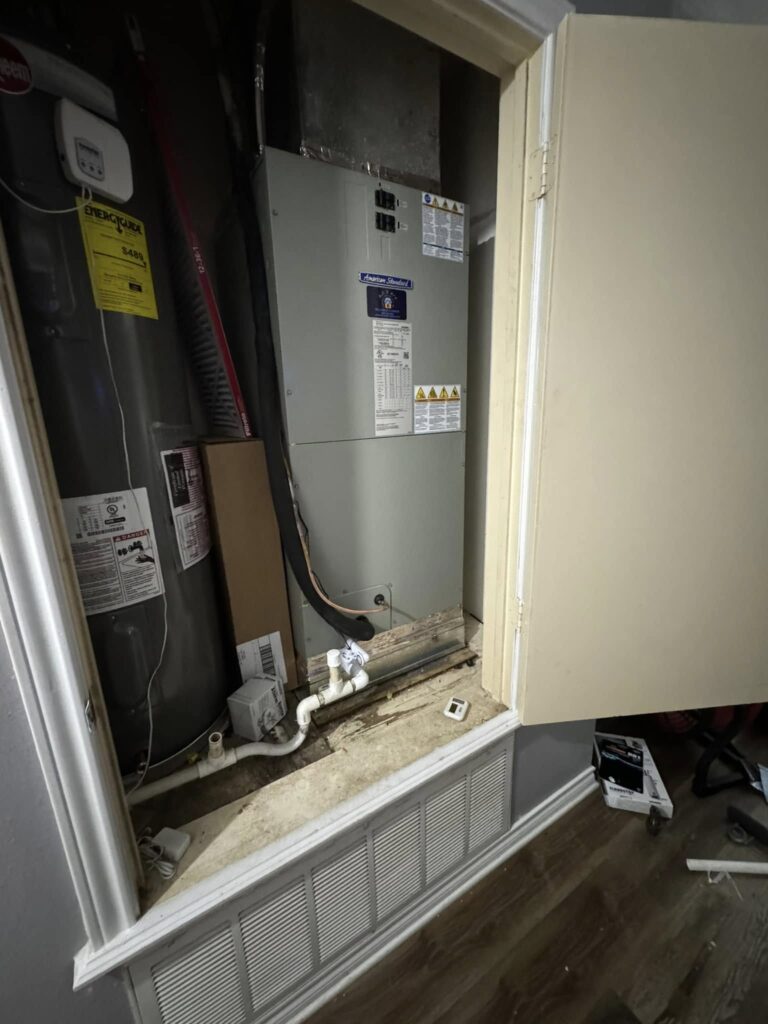
The reassuring news is that the majority of first startup odors fall into the harmless category and resolve without any repair at all. Seasonal dust burn off is the leading example, producing a dry scorched smell that peaks in the first cycle and disappears within a few hours of total runtime. Brand new furnaces have their own version of this, since manufacturing oils, protective coatings, and paint on the heat exchanger cure during the first several heating cycles. That new equipment smell is sometimes described as sharp or slightly chemical, and it fades steadily over the first week of normal operation. A faint warm metal smell during long runtimes in extremely cold weather is also within normal range for many systems. What all of these share is a clear downward trend, meaning each cycle smells less noticeable than the one before it.
Timing is the most useful diagnostic tool you have for separating normal from abnormal. A harmless odor gets weaker with runtime, while a problem odor stays the same or gets stronger. If the smell is still just as strong after a full day of heating, treat it as a service issue instead of a seasonal nuisance. Odors that appear suddenly in the middle of winter, after months of clean operation, also deserve attention because nothing about the dust situation changed overnight. Pay attention to any odor that arrives alongside another symptom such as weak airflow, short cycles, unusual noise, or a burner that struggles to light. Symptoms rarely travel alone, and the combination usually points to a specific mechanical cause.
Getting ahead of the season is the easiest way to keep the entire experience uneventful. Test your heat in early fall on a mild day, run the system for at least twenty minutes, and let the dust burn off while the windows are open and you are awake to monitor it. Replace the filter first, confirm the return grille is not blocked by furniture, and check that supply registers in every room are open and unobstructed. Listen for smooth ignition, steady blower operation, and a clean shutdown sequence rather than rough cycling. Schedule professional maintenance before the first hard freeze, when appointment availability is still comfortable and lead times on parts are short. Want your heating system checked before the first cold night? Click here for our furnace maintenance and service.
How to Tell the Difference Between Furnace Smells at Startup
Three questions will sort almost any furnace odor into the right category within a few minutes. First, what does it actually smell like, described as specifically as possible in terms of dust, mold, gas, plastic, or smoke. Second, how long does the odor last once the system begins running, measured in minutes rather than impressions. Third, does it return with the same intensity at the start of every heating cycle, or does each cycle smell weaker than the last. Dust burn off answers those questions with a scorched smell, a short duration, and a clear pattern of fading. A gas leak, an electrical fault, or a venting failure answers with persistence and often with intensity that grows.
Layering in a few observations makes your description even more useful to a technician. Note where in the house the odor is strongest, since a smell concentrated near the equipment points to a different cause than one distributed evenly through the registers. Check the burner flame if it is visible through a sight glass, because a steady blue flame indicates good combustion while a yellow, flickering, or rolling flame does not. Look for water around the base of the air handler, soot marks on the cabinet, or a filter that is gray and collapsed against its frame. Write down the time the smell started and how long the system had been running, which helps enormously during diagnosis. Photos of the equipment nameplate and the filter size speed up the visit as well.
When in doubt, choose caution over convenience, because the cost of a service call is trivial next to the cost of a combustion problem. Shut down the system at the thermostat, and shut it down at the breaker as well if you suspect anything electrical. Leave the house immediately for any sulfur or gas odor, and for any carbon monoxide alarm activation, without stopping to investigate. Ventilate the space by opening windows once you are certain there is no gas present and no active alarm. Then call a licensed technician and describe exactly what you observed, including the smell, the timing, and any other symptoms. Accurate information at the start of a call frequently determines how quickly the underlying problem gets solved.
Why You Need a Furnace Inspection Before the First Cold Night in East Texas
Most strange furnace odors trace back to conditions that a thorough fall inspection would have caught weeks earlier. Cooling season in Longview runs long and hard, which means your heating equipment sits untouched for six months or more while dust settles and small problems go unnoticed. A professional visit before the first cold front finds the loose connection, the clogged drain, the cracked vent joint, and the failing capacitor while there is still time to address them calmly. Scheduling early also means you are not competing for appointment slots during the first freeze, when every heating contractor in Gregg County is running full. R.C.s A/C Reliable Climate performs complete heating inspections across Longview, Kilgore, Marshall, Gladewater, White Oak, Hallsville, Gilmer, Lakeport, and Liberty City. Ready to get on the schedule before the rush? Click here for HVAC service in Longview, TX.
What a Professional Furnace Inspection Covers Before Winter
A complete furnace inspection goes far beyond glancing at the equipment and swapping a filter. Our technicians inspect the heat exchanger, clean and test the burners, verify ignition performance, and check the flame sensor for the buildup that causes nuisance shutdowns. Gas pressure is measured and adjusted to the manufacturer specification, and every gas connection in the appliance is checked for leaks. Electrical work includes tightening connections, testing capacitors under load, measuring motor amperage, and confirming that safety switches operate as designed. Airflow gets equal attention through static pressure readings, temperature rise measurements, and a look at the return path feeding the system.
Venting and combustion safety form the core of any responsible furnace inspection. The technician confirms that the flue is clear, correctly sized, properly sloped, and free of disconnected joints or corrosion. Draft is verified so combustion gases actually exit the structure instead of spilling into the mechanical space. Condensate handling is checked on high efficiency models, since a blocked trap or drain will lock the system out and can cause water damage. These checks catch the exact conditions that produce dangerous odors long before you ever notice them at a register.
The inspection also documents the current condition of your equipment so you can plan rather than react. You receive clear notes on component wear, refrigerant and airflow readings from the cooling side, and an honest assessment of remaining service life. Recommendations are prioritized by safety first, reliability second, and efficiency third, with no pressure to purchase anything unnecessary. That approach reflects a core company value, since honest recommendations without unnecessary upsells is something we take seriously on every call. When replacement genuinely makes more sense than repair, we say so plainly and provide a free estimate.
How a Furnace Inspection Prevents Strange Smells Before They Start
Preventive service directly eliminates the sources behind nearly every odor described in this article. Cleaning the blower wheel, the burner compartment, and the cabinet interior removes the dust that produces the seasonal burn off smell in the first place. Flushing the condensate drain and cleaning the evaporator coil removes the moisture and biological growth responsible for musty odors. Tightening electrical connections and testing motors under load catches the overheating conditions that create burning plastic smells before insulation ever melts.
Airflow correction is the quiet hero of odor prevention and of equipment longevity. Measuring temperature rise reveals restricted airflow that would otherwise overheat the heat exchanger and trip the limit switch repeatedly through the winter. Sealing and repairing accessible duct connections keeps humid attic air, insulation fibers, and rodent debris out of the airstream entirely. Correct filter selection balances filtration against static pressure so the system breathes properly instead of straining against a filter that is too restrictive.
Regular maintenance pays for itself through fewer emergency calls, lower energy bills, and longer equipment life. Manufacturers also require documented annual service to keep most parts warranties valid, which matters a great deal when a major component fails. Systems that receive consistent attention run closer to their rated efficiency and hold that performance year after year. Curious how your ductwork affects comfort, odors, and energy use? Click here for our air duct and airflow services.
Why Choose R.C.s A/C Reliable Climate for Your Furnace Inspection
R.C.s A/C Reliable Climate is locally owned and operated right here in Longview at 3 Lewis Drive, and we serve the surrounding communities every day of the week. We are licensed and insured under Texas HVAC License number TACLA129043C, and our technicians work on both residential heating systems and commercial refrigeration equipment. That combination of experience means we understand combustion, airflow, and controls at a level that goes well past filter changes. Every visit is built around a straightforward promise of honest recommendations with no unnecessary upsells. When something is fine, we tell you it is fine.
Our service is designed around the way heating problems actually happen, which is rarely at a convenient hour. We offer 24/7 emergency HVAC service, so a furnace that shuts down at two in the morning during a freeze gets a real response rather than a voicemail. New installations include free estimates, a 10 year parts warranty, and a 1 year labor warranty, along with financing options for both HVAC and refrigeration work. We handle furnaces, heat pumps, mini splits, thermostats, ductwork, air conditioning, and commercial refrigeration under one roof. That range means one trusted contractor for the entire property.
We are dedicated to always providing a 5 star service, and that standard shows up in the small details of every appointment. Technicians explain what they found, show you the readings, and answer questions in plain language before any work begins. If your furnace smelled strange the first time you turned it on this season, we will identify the cause and tell you exactly what it will take to fix it. Call R.C.s A/C Reliable Climate at (903) 316-6855 or email info@iwantclimate.com to schedule your heating inspection. Get on the calendar now and head into winter with a system you can trust.