
Why Duct Leaks Waste More Energy Than You Think
Most homeowners in Longview think about their air conditioner when the power bill climbs, but the duct system moving that cold air is just as responsible for what you pay every month. A typical home loses somewhere between 20 and 30 percent of the air traveling through its ducts because of leaks, gaps, disconnected joints, and crushed flex runs. That is air you already paid to cool, dumped straight into an attic that nobody lives in. The system still runs, the thermostat still reads a number, and the equipment still looks like it is working fine, which is exactly why duct leaks go unnoticed for years at a time. Late summer in East Texas is when the waste shows up most clearly, because the attic above your ceiling is often sitting between 120 and 140 degrees while your air conditioner fights to hold 74 in the living room. The gap between what your equipment produces and what actually reaches your registers is the hidden cost, and it grows every season the leaks stay open. Understanding where that loss happens, and what it does to your comfort and your equipment, is the first step toward getting the capacity you already own back into the rooms you actually use.
How Duct Leaks Waste Energy Long Before You Notice Higher Bills
Duct leaks do not announce themselves. There is no warning light, no rattling noise, and no shutdown, so the system keeps running longer to make up for air it never delivered. Energy loss from duct leaks compounds quietly because the equipment simply extends its runtime until the thermostat is satisfied, and longer runtime is the entire reason the bill goes up. Leaks also change the pressure balance of the house, which pulls unconditioned air in through walls, attic hatches, can lights, and wall cavities. Every one of those effects makes the air conditioner work harder without producing one extra degree of comfort where you want it. In a region with our humidity, the moisture load that comes along with leaky ducts is often more expensive than the temperature loss itself. The following sections break down where the energy actually goes.
Where Duct Leaks Waste Energy Inside a Hot East Texas Attic
The vast majority of residential duct systems in Longview, Kilgore, and Hallsville run through the attic, and that placement is the single biggest reason duct leaks are so costly here. Attic temperatures during a Texas summer routinely climb past 130 degrees in the afternoon, and the insulation wrapped around flex duct is usually rated somewhere around R6 or R8, which is thin protection against that kind of heat. Even a perfectly sealed duct loses some capacity in those conditions, because the temperature difference between 55 degree supply air and 130 degree attic air is enormous and heat always moves toward cold. Now add an open seam at a boot, a loose collar at the plenum, or a piece of failed cloth tape from a previous repair, and the loss stops being gradual. Conditioned air pours out at full blower pressure into a space that provides no benefit at all. The air conditioner has no way to know this happened, so it keeps running. Every minute of that extra runtime is compressor wear, blower wear, and money.
Attic ducts also fail in ways that are physical rather than thermal. Flex duct sags between supports, kinks around framing members, and gets stepped on by anyone who goes up there to store boxes or run a cable. A compressed section restricts airflow the same way a partially closed valve restricts water, and the pressure that builds behind that restriction pushes harder on every joint upstream. Joints that were marginal become open leaks under that added pressure. Rodents chew through insulation and inner liner, storm damage shifts framing, and decades of thermal cycling makes older mastic crack and separate from the metal. None of this is visible from inside your house. The only symptom you get is a room that never quite cools and a bill that keeps creeping up each summer.
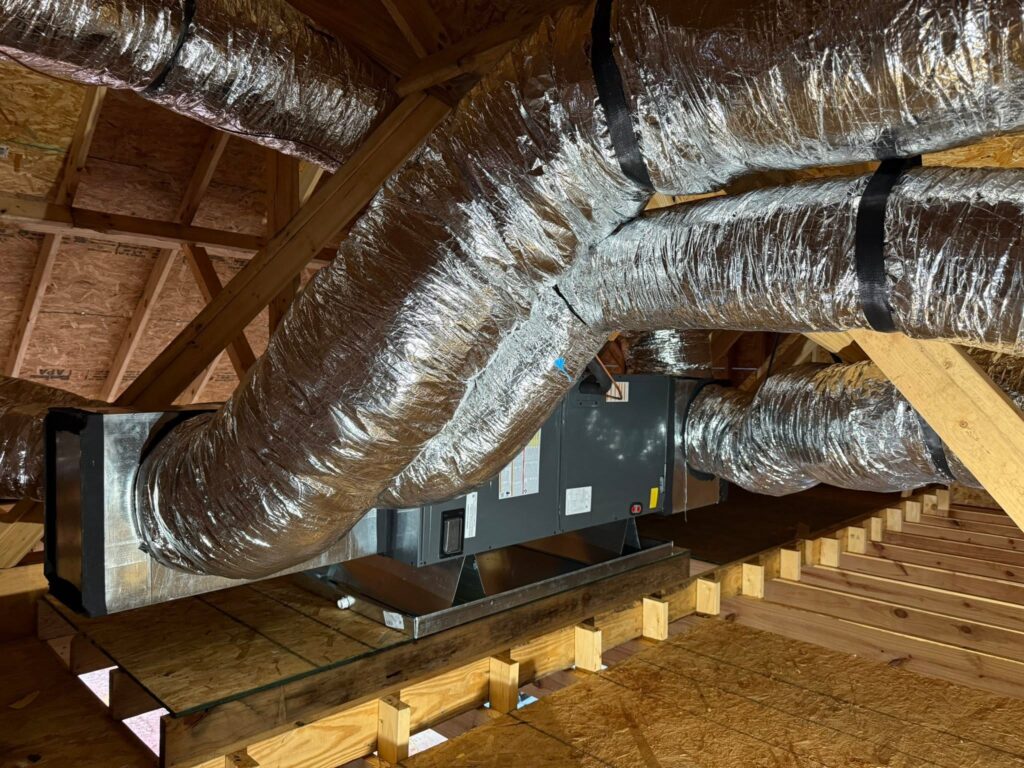
The plenum and the air handler cabinet deserve special attention because they are the highest pressure points in the entire system. Air leaving the blower is under the most force it will experience anywhere in the ductwork, so a gap at the supply plenum leaks far more air per square inch than the same gap out at a bedroom register. Filter slots, cabinet seams, and the connection between the evaporator coil housing and the plenum are all common failure points, especially on units installed before duct sealing was taken seriously. We regularly find systems where a significant portion of the total loss is happening within three feet of the equipment. Fixing that area first gives the largest immediate return, because you are recovering air at the point of maximum pressure. Sealing the far end of a branch run matters too, but the plenum is where the money is. If you want a closer look at how your duct system is built and where it is failing, click here for our air duct services in Longview TX.
How Supply Side Duct Leaks Waste Cooling Energy and Room Comfort
Supply ducts are the runs carrying cooled air from the air handler out to the registers in each room, and a leak on this side is a direct dollar for dollar loss. Air escaping a supply leak was already cooled and dehumidified by the evaporator coil, meaning you paid the full electrical cost to condition it before it ever left the cabinet. When that air ends up in the attic, you get zero comfort benefit and you also warm the attic slightly, which then radiates back down through your ceiling insulation. It is the worst possible outcome for the energy you purchased. Rooms served by the leaking branch receive less airflow than the design intended, so they run warm no matter where you set the thermostat. Families usually respond by lowering the setpoint, which makes every other room colder and drives runtime even higher. The comfort complaint and the energy waste are the same problem wearing two different faces.
There is a second consequence to supply leaks that most homeowners never hear about. When conditioned air escapes into the attic, the house loses volume, and a house that loses volume has to replace it from somewhere. That replacement air comes in through every crack in the building envelope, which in a Texas summer means hot outdoor air carrying substantial moisture. Your air conditioner then has to remove both the heat and the humidity from air that was never supposed to enter the house in the first place. This is why homes with bad supply leakage often feel sticky and cool at the same time. The thermostat is satisfied on temperature while the humidity level sits well above where it should be. You end up uncomfortable in a house that technically hit its target.
Long supply runs to distant rooms suffer the most in this arrangement. A bonus room over a garage, a back bedroom, or an addition at the end of the house already receives air that traveled the farthest and lost the most capacity along the way. Any leak on that run removes what little pressure was left to push air through the final boot. Homeowners then close registers in other rooms trying to force more air to the back, which raises static pressure across the whole system and stresses the blower. Balancing dampers, correct duct sizing, and sealed joints solve this properly, while closing vents only trades one problem for a worse one. Getting airflow right at the source is always cheaper than fighting it at the register. If one room in your house has never cooled like the rest, that is a duct symptom far more often than an equipment symptom.
How Return Side Duct Leaks Waste Energy and Pull Humidity Into Your Home
Return ducts carry air from the house back to the air handler, and leaks on this side behave completely differently from supply leaks. A return leak does not push air out; it pulls air in, and it pulls that air from whatever space the duct passes through. In most Longview homes, that means the return is inhaling 130 degree attic air loaded with humidity, dust, fiberglass fragments, and anything else floating around up there. That superheated air mixes with the cooler return air from your rooms before it ever reaches the evaporator coil. Your air conditioner then has to cool a hotter, wetter air stream than it was designed for, using the same compressor and the same coil surface. Capacity that should be going toward your living space gets consumed handling attic air instead. The system is doing real work; it is just doing it for the attic.
Humidity is where return leaks get genuinely expensive in East Texas. Removing moisture from air requires latent capacity, and latent capacity is a finite share of what your equipment produces. When a return leak feeds a constant stream of humid attic air into the system, a large portion of your cooling output goes toward wringing moisture out of that air rather than lowering the temperature of your house. Indoor humidity climbs, the house feels clammy, and the thermostat setpoint gets pushed lower and lower in search of relief. Elevated indoor humidity also encourages mold growth around registers, in closets, and behind furniture on exterior walls. Fixing the leak often improves comfort more dramatically than any thermostat adjustment ever could. It is one of the few repairs where customers notice the difference the same afternoon.
Return leaks carry an air quality cost on top of the energy cost. Air pulled from an attic brings insulation fibers, dust, pollen that settled through roof vents, and sometimes rodent contamination straight into the duct system, where it lands on the evaporator coil and gets distributed through the house. A dirty coil loses heat transfer efficiency, which raises runtime again, and heavy loading can eventually restrict airflow enough to cause the coil to ice over. Filters help, but a filter sitting at the return grille does nothing about air entering through a leak downstream of it. Homes with chronic dust problems despite frequent filter changes very often have return side leakage as the underlying cause. Sealing the return is both an efficiency repair and an indoor air quality repair. Both benefits arrive from the same work.
Signs of Duct Leaks and How Professional Duct Leak Testing Finds Them
You do not need special equipment to suspect duct leaks, but you do need it to confirm and locate them. Most homeowners recognize the symptoms long before they connect those symptoms to the duct system, because the complaints sound like equipment problems. Uneven room temperatures, high bills, long runtimes, and persistent dust all point toward distribution rather than capacity. A proper diagnosis separates duct issues from refrigerant issues, airflow issues, and sizing issues, which matters because each one has a different fix and a different price. Guessing is how homeowners end up replacing a working air conditioner and still living with the same warm back bedroom. Testing gives you a number instead of an opinion.
Common Signs of Duct Leaks Homeowners Notice First
The clearest sign of duct leaks is a room that will not hold temperature with the rest of the house. If your back bedroom sits four or five degrees above the thermostat every August afternoon, and the register in that room produces weak airflow you can barely feel, the branch serving that room is a strong suspect. Another common indicator is an air conditioner that runs nearly continuously through the afternoon without ever satisfying the thermostat. Some runtime is normal on a 100 degree day, but a correctly sized and correctly ducted system should still cycle off periodically. Continuous operation combined with adequate refrigerant charge points toward air that is not making it to the living space. Homeowners often describe this as the unit not keeping up, when the real issue is the unit not delivering.
Dust is the second signature symptom, and it is easy to overlook because everyone assumes dust is normal. Excessive dust accumulation on furniture within days of cleaning, dark streaking around supply registers, and visible debris on return grilles all suggest the duct system is drawing air from somewhere it should not. Fiberglass fibers, attic dust, and insulation particles have a distinctly gritty quality that differs from ordinary household dust. Families with allergy symptoms that worsen when the system runs are often reacting to attic air entering through return leaks. Filter changes that come out unusually dirty after only a few weeks tell the same story. The filter is doing its job on the air it sees, but it never sees the air entering downstream.
Humidity and bill history round out the picture. A house that feels damp at 74 degrees, windows that sweat, or a musty odor near supply registers all indicate the system is losing the moisture removal battle. Pull up your electric bills from the past three summers and compare the same billing month year over year, adjusting for rate changes. A steady upward trend without any change in household habits usually means the system is progressively losing efficiency, and duct degradation is one of the most common causes. Equipment does lose some performance with age, but a well maintained system should not show dramatic year over year jumps. When it does, the distribution side deserves a hard look. Need help pinpointing what is driving your cooling costs? Click here for our air conditioning services.
How Professional Duct Leak Testing Locates Hidden Duct Leaks
Professional duct leak testing replaces guesswork with measurement. A duct leakage test pressurizes the sealed duct system to a known pressure, typically 25 pascals, and measures how much airflow it takes to hold that pressure. The resulting number tells us exactly how leaky the system is in cubic feet per minute, which can then be compared against the total conditioned square footage of the home. That gives a percentage that is meaningful rather than a subjective judgment about whether the ducts look bad. Modern construction standards target very low leakage rates, and most existing homes in our service area test well above them. Having the number in hand lets you decide on repairs based on facts.
Static pressure testing runs alongside leakage testing and answers a different question. By measuring pressure before and after the coil and across the filter, we can tell how hard the blower is fighting to move air through the system. High static pressure indicates restriction from undersized returns, crushed flex, dirty coils, or overly restrictive filters, and restriction contributes directly to leakage by raising pressure at every joint. Airflow measurement at individual registers shows which branches are underperforming and by how much. Combining these three measurements builds a complete picture of the distribution system rather than a snapshot of one symptom. Two homes with identical equipment can have wildly different real world performance, and this is where that difference shows up.
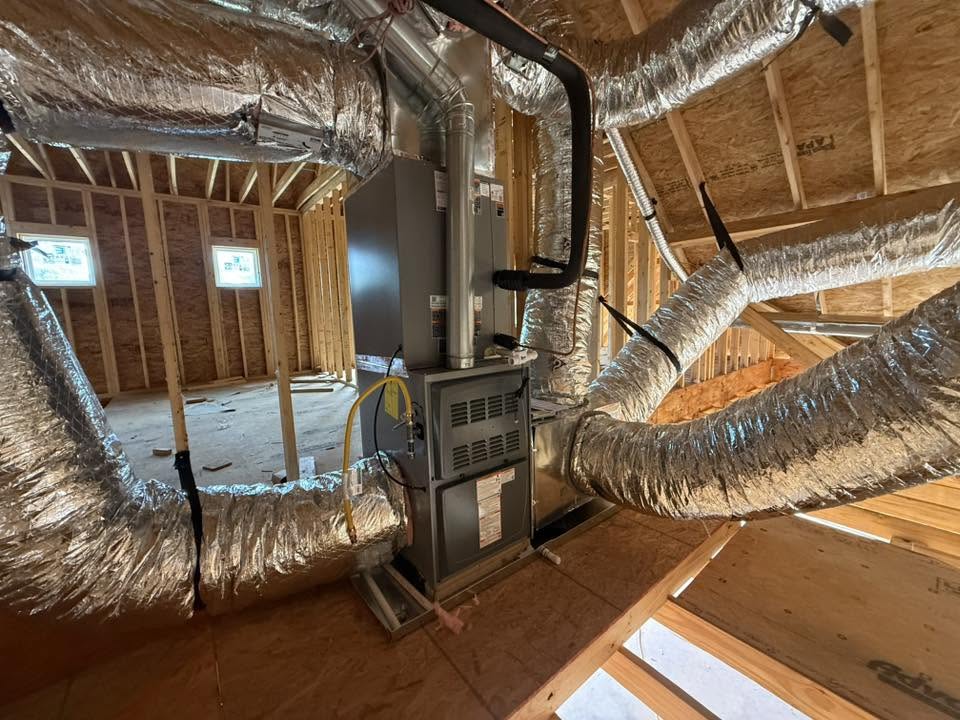
Visual inspection completes the diagnosis, and there is no substitute for a technician actually crawling the attic. We look at every plenum connection, every branch takeoff, every boot penetration through the ceiling, and every splice in the flex duct. Disconnected runs are more common than people expect, particularly after roofing work, insulation blowing, or any trade working in the attic. We check the condition of the insulation jacket, the integrity of the inner liner, and the support strapping that keeps runs from sagging into low spots. Photos of the problem areas get shared with the homeowner so you can see exactly what we found. You should never be asked to authorize a repair you have not seen evidence for.
How Duct Leak Repair and Duct Sealing Stops the Energy Waste
Duct sealing done correctly starts with mastic, not tape. Water based duct mastic is a thick sealant applied over joints and connections with a brush, and it remains flexible while forming a permanent airtight bond that survives decades of thermal cycling. Where reinforcement is needed across wider gaps, fiberglass mesh tape gets embedded in the mastic to bridge the span. Foil tapes rated to UL 181 standards have their place on certain connections, but standard cloth duct tape has no business anywhere in an HVAC system because the adhesive fails within a couple of years in attic heat. Every takeoff, boot, and plenum seam gets treated, along with the air handler cabinet itself. The goal is a system where the only openings are the registers and the return grilles.
Some duct problems cannot be sealed and have to be replaced. Flex duct with a torn inner liner, crushed sections that restrict airflow, undersized returns, and runs that were never properly sized for the rooms they serve all require actual reconstruction. Adding a return in a closed off bedroom, upsizing a return trunk, or replacing a poorly designed branch layout delivers gains that sealing alone cannot reach. Proper duct design follows the same load calculation logic used to size the equipment, so airflow matches what each room actually needs. Repairs that ignore sizing put a bandage over a design problem. We tell homeowners honestly which category their system falls into, because paying to seal ducts that need replacing helps nobody.
Sealing also has to account for combustion safety in homes with gas appliances. Changing the pressure balance of a house can affect how a gas furnace or a water heater vents, and any duct work performed on a system serving gas equipment should include verification that appliances still draft properly. This becomes especially relevant heading into the heating season, when the same duct system that wasted your cooling all summer starts wasting your heat. Homes with leaky ducts pay twice each year, once in July and once in January, for the exact same defect. Repairing now means you capture savings on both sides of the calendar. Planning ahead for cold weather? Click here for our furnace services before the first freeze arrives.
Why You Need Duct Leak Repair Before the Next Season Arrives
Duct leaks are one of the few HVAC problems that get steadily worse without ever triggering a breakdown. Every summer of attic heat degrades tape and insulation a little further, every seasonal pressure cycle works joints a little looser, and every month of extra runtime adds wear to a compressor you would rather not replace early. The repair itself is modest compared to equipment costs, and the savings continue every month for as long as you own the house. Early September is the right time to address it, because you still have hot weather ahead and a heating season right behind it. Getting the distribution system tight before either load arrives means your equipment finally gets to deliver what it was built to deliver. That is capacity you already paid for.
What Duct Leak Repair Saves You Every Single Month
Recovering 20 percent of your conditioned air translates directly into shorter runtimes, and shorter runtimes show up on the very next bill. The exact savings depend on your home, your equipment, and how bad the leakage was, but the mechanism is simple and predictable. Air that reaches your rooms satisfies the thermostat; air that reaches the attic does not. Homeowners frequently report that rooms which never cooled properly finally hold temperature after sealing, which allows them to raise the thermostat setpoint a degree or two. Each degree of setpoint adjustment compounds the savings further. The comfort improvement and the cost reduction arrive together.
There is also an equipment longevity argument that matters more than most people realize. A compressor that runs 30 percent fewer hours each summer sees meaningfully less wear over a decade of operation. Blower motors, capacitors, and contactors all have lifespans tied to runtime and start cycles rather than calendar years. Reducing the load on those components delays the day you face a major repair or a full replacement. Duct sealing is one of the cheapest ways to extend the service life of expensive equipment. You are protecting the investment sitting in your side yard.
Humidity control improves at the same time, and that improvement carries value beyond comfort. Lower indoor humidity reduces mold risk, protects wood flooring and cabinetry from seasonal movement, and makes higher thermostat settings feel acceptable. Homes running at 50 percent relative humidity feel noticeably cooler at 76 degrees than homes running at 65 percent do at 73. That relationship is why humidity control is a legitimate energy strategy rather than just a comfort preference. Sealing the return side is usually the fastest path to getting there. The savings and the comfort reinforce each other.
When to Schedule Duct Leak Repair in Longview and East Texas
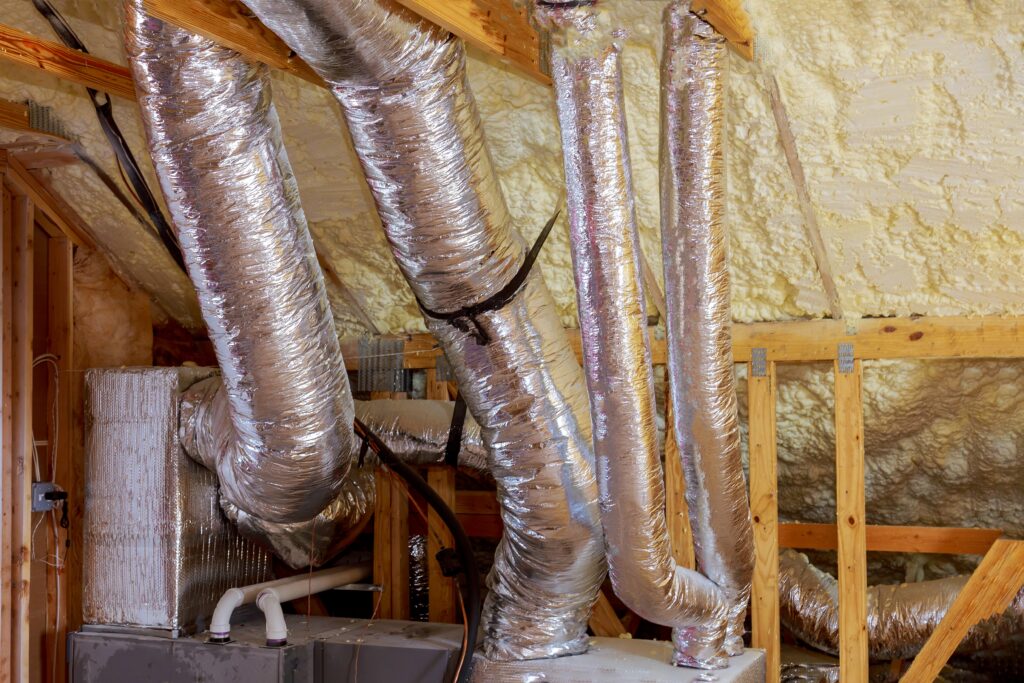
The best timing for duct work is right now, during the shoulder period between peak cooling demand and the start of heating season. Attic access is more tolerable, scheduling is more flexible, and you get the benefit across both remaining seasons. Waiting until the first hard freeze means competing with emergency calls for scheduling, and waiting until next June means paying for another full summer of waste. Homeowners in Longview, White Oak, Gladewater, Kilgore, Hallsville, Marshall, Gilmer, Lakeport, and Liberty City all face the same attic conditions and the same duct failure patterns. The geography is consistent enough that we know what to look for before we open the access hatch.
Certain events should trigger a duct inspection regardless of the calendar. Any roofing work, attic insulation project, cable or satellite installation, or storm damage creates opportunities for ducts to get disconnected or crushed. New equipment installations are another critical moment, because a new high efficiency air conditioner connected to a leaky duct system will never deliver its rated performance. Buying a home is a third trigger point, since you have no history on a system you did not maintain. In each of these cases, testing before the next billing cycle protects you from paying for a problem someone else created.
Homes with a history of comfort complaints deserve testing even without a triggering event. If you have already had a technician check refrigerant charge, clean the coil, and confirm the equipment is operating correctly, and you still have a room that will not cool, the answer is almost certainly in the ducts. Chasing the same complaint through repeated service calls costs more than one thorough diagnostic. We would rather find the real cause once than treat symptoms repeatedly. Serving your area from right here in Longview, click here for our Longview TX service page to see everything we cover locally.
Why Choose R.C.s A/C Reliable Climate for Duct Leak Repair
R.C.s A/C Reliable Climate is locally owned and operated in Longview, and we hold Texas HVAC License TACLA129043C. We are licensed and insured, and every technician who enters your attic works to the same standard we would apply in our own homes. Our approach to duct work starts with measurement and inspection, and we show you what we found before we quote anything. You will get honest recommendations with no unnecessary upsells, because a company that sells you work you do not need does not stay in business in a community this size. That reputation is the whole reason we are still here.
We back our work with a 10 year parts warranty and a 1 year labor warranty, and we offer financing for both HVAC and refrigeration services so a needed repair does not have to wait. Free estimates are available for new HVAC installations, and we provide 24/7 emergency service when something fails at the worst possible time. Our commercial customers rely on us for walk in coolers, walk in freezers, and prep table refrigeration alongside comfort cooling and heating. The same diagnostic discipline applies across all of it. We are dedicated to always providing five star service on every call.
Getting started is straightforward. Call us at (903) 316-6855 or email info@iwantclimate.com, and we will schedule a duct evaluation at your convenience. You will get a clear explanation of what your system is losing, what it will take to fix, and what the repair means for your monthly costs. No pressure, no scare tactics, and no work performed without your approval. Stop paying to cool your attic and put that capacity back where it belongs.