
What to Expect During a Heat Pump Inspection
A heat pump inspection is a full performance review of the single system that both heats and cools your home throughout the entire year. Because a heat pump runs in two seasons instead of one, it logs far more operating hours than a separate furnace and air conditioner pair, and all of that extra runtime eventually shows up as worn capacitors, dirty coils, weak contactors, and slow refrigerant leaks. Early fall is the smartest time to book the visit, since your system in East Texas has just finished a long and punishing cooling season and is about to reverse itself into heating mode for the first time in months. Most homeowners have never stood in the yard and watched a technician work through the full process, so the appointment can feel like a bit of a mystery from start to finish. This guide walks through every stage of a professional heat pump inspection, beginning with the first thermostat reading and ending with the written report placed in your hands. You will learn exactly what gets tested, which measurements actually matter, and what a thorough technician should be able to explain to you before leaving the driveway. Knowing the process in advance makes it much easier to tell a complete inspection from a rushed one that only involves a quick glance and a hosed off coil.
What Happens During a Professional Heat Pump Inspection
A complete heat pump inspection covers three connected areas: the outdoor condensing unit, the indoor air handler, and the electrical and control systems that tie the two halves together. A technician should test the equipment in both cooling and heating operation, because a heat pump that performs beautifully in one mode can still fail badly in the other once the reversing valve shifts position. Expect the visit to take between sixty and ninety minutes for a single system, and longer for homes running two or more units. Real measurements separate a professional inspection from a simple visual walkthrough, so you should see gauges, a multimeter, a thermometer, and often a manometer come out of the truck. Every reading gets compared against the manufacturer specifications printed on the data plate of your specific model rather than against a general rule of thumb. At the end of the appointment, you should receive documented numbers, not just a verbal assurance that everything looked fine.
The Outdoor Unit Checks in a Heat Pump Inspection
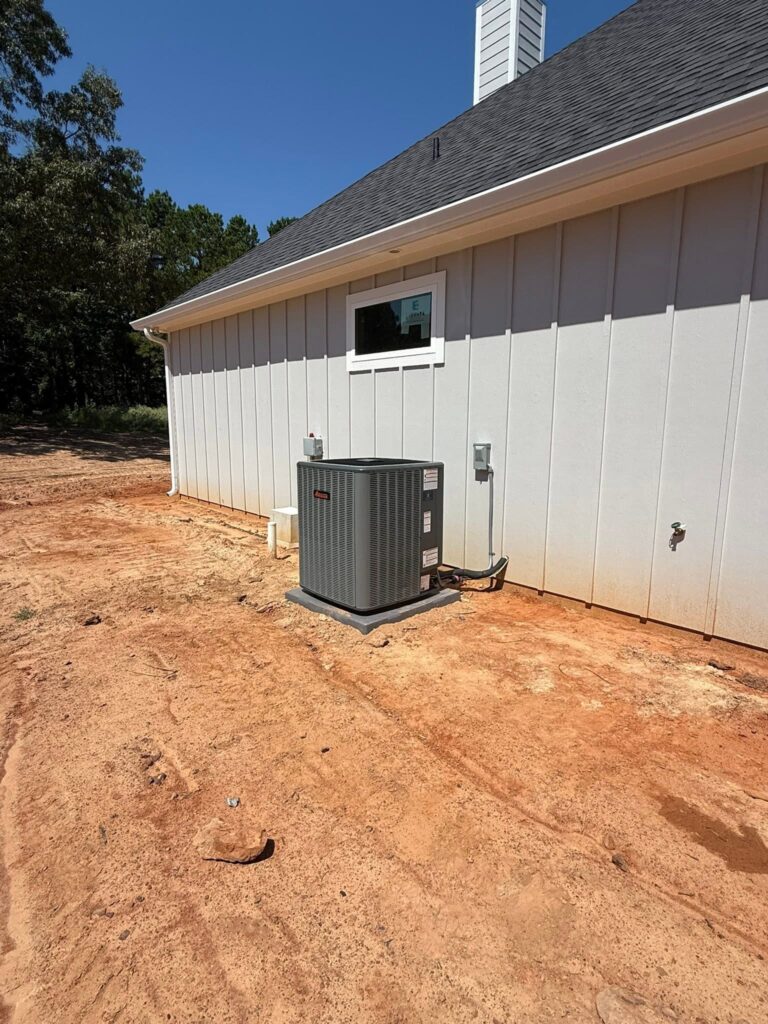
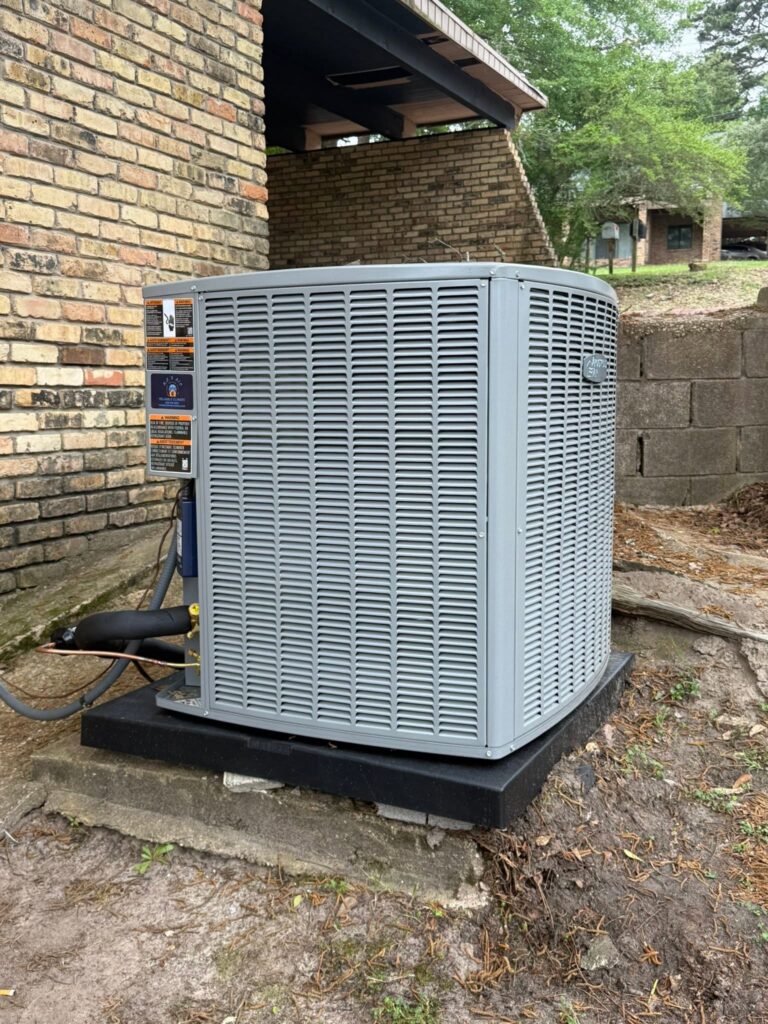
The outdoor portion of a heat pump inspection starts with the condenser coil, because that coil handles heat rejection in summer and heat absorption in winter and it cannot do either job while it is packed with cottonwood, grass clippings, and East Texas pollen. A technician inspects the fins for bending, corrosion, and blockage, then measures how much clearance sits around the cabinet on all four sides and above the fan discharge. Landscaping that has crept within a foot of the unit chokes airflow and drives up head pressure, which quietly raises your power bill long before anything actually breaks. The fan motor gets checked for smooth bearing rotation, correct blade condition, and proper amp draw against the rating stamped on the motor housing. Compressor operation is evaluated through amperage readings compared to the rated load amps on the data plate, along with a listen for hard starting, rattling, or an unusual pitch during startup. The base pan and drain openings are cleared, since standing water in a heat pump base pan freezes during a cold snap and can damage the coil or the defrost sensor. Refrigerant line insulation is examined too, because missing insulation on the suction line steals capacity in every season and is one of the most common findings on older installations.
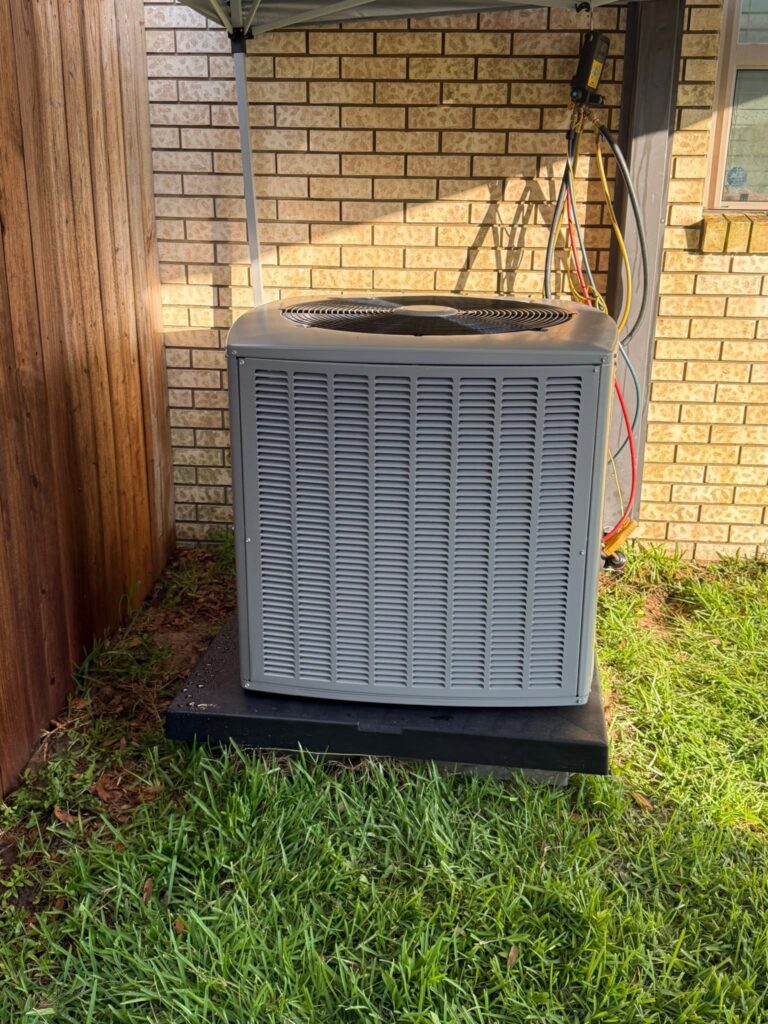
Refrigerant charge verification is the part of the outdoor inspection that requires the most skill and the most patience. A technician connects gauges, records suction and liquid pressures, then calculates superheat or subcooling depending on the metering device your system uses. A fixed orifice system is charged by superheat, while a system with a thermostatic expansion valve is charged by subcooling, and using the wrong method produces the wrong answer every single time. Those calculations only mean something once the system has run long enough to stabilize, which is why a technician who checks pressures ninety seconds after arrival is not giving you reliable information. Charge that sits low almost always points to a leak somewhere in the line set, the coil, or a service valve, since refrigerant is not consumed the way fuel or oil is consumed. When the numbers come back low, the correct next step is a leak search using an electronic detector, bubble solution, or dye, not a simple top off that leaves the same problem waiting for you in January. Overcharge deserves equal attention, because too much refrigerant floods the coil, raises compressor amp draw, and shortens the life of the most expensive component in your home.
The reversing valve and defrost system are the two features that make a heat pump different from a standard air conditioner, and both belong in every inspection. The reversing valve slides internally to swap the roles of the indoor and outdoor coils, and a technician confirms that it energizes cleanly and completes the shift without hanging halfway between positions. A valve that leaks internally will let hot and cold refrigerant blend together, producing lukewarm supply air and a heating bill that climbs without explanation. The defrost board, defrost thermostat, and outdoor sensor are tested next, because frost naturally forms on the outdoor coil during humid winter mornings and the system must clear it automatically. A properly working defrost cycle temporarily reverses the system, energizes backup heat to protect your comfort, and then returns to normal heating once the coil clears. Boards that fail in the field often run defrost far too frequently or skip it entirely, and both failures waste energy while building a block of ice on the coil. Testing this in the fall matters, since a defrost problem discovered in September is a routine repair and the same problem discovered during a hard freeze becomes an emergency call. Ready to have your system checked before the first cold front arrives? Click here for our heat pump service.
The Indoor Air Handler Checks in a Heat Pump Inspection
Indoor work during a heat pump inspection begins at the air filter and the blower assembly, since airflow problems cause a large share of the failures that get blamed on refrigerant or compressors. A technician notes the filter size, the actual condition of the media, and how restrictive the filter rating is for your equipment, because a dense filter installed in a system never designed for it strangles airflow across the board. The blower wheel is inspected for dust buildup on the individual blades, and a wheel caked with a heavy layer of grime can lose a surprising percentage of its designed capacity. Motor amp draw, capacitor values, and belt condition on older units are all recorded. Many newer systems use a variable speed motor, which requires checking programmed speed taps and confirming that the selected profile matches the tonnage of the outdoor unit. Total external static pressure is measured with a manometer across the air handler, giving a direct reading of how hard the blower is fighting the duct system. Most residential equipment is rated for roughly one half inch of water column, and readings well above that point toward undersized returns, crushed flex duct, or closed supply registers rather than an equipment defect.
The indoor coil and the condensate system come next, and both deserve a careful look after a full Texas cooling season. The evaporator coil is inspected for dirt loading, biological growth, bent fins, and any oily residue that would suggest a refrigerant leak at a brazed joint or a return bend. A dirty indoor coil raises pressure, lowers capacity, and can cause the coil to freeze into a solid block of ice during long cooling runs. The primary drain pan, the secondary pan, and the drain line all get flushed and checked for standing water, algae, and correct slope toward the exit point. Float switches and overflow safeties are tested by hand to confirm they will actually shut the system down before water reaches your ceiling or your flooring. Cabinet panels, door gaskets, and duct connections at the unit are sealed where air is escaping, since leakage right at the equipment costs you conditioned air before it ever reaches a single room. Insulation inside the cabinet is checked for sagging or deterioration, which leads to sweating panels and hidden moisture damage in attic installations.
Auxiliary heat testing is a step many quick inspections skip entirely, and it is one of the most important parts of preparing a heat pump for winter in East Texas. Nearly every residential heat pump in this region includes electric resistance heat strips inside the air handler that supplement the compressor when outdoor temperatures drop or when the system runs a defrost cycle. A technician energizes each stage individually and measures amp draw on every leg to confirm that all elements actually heat and that none have burned open over the summer. Sequencers and relays are checked so the strips stage on smoothly instead of slamming the full electrical load onto your panel at once. High limit switches and fusible links are verified, because those safeties protect the cabinet and your home from overheating if airflow ever fails. Supply air temperature is recorded in heating mode with the compressor alone and again with backup heat active, giving a clear picture of what each stage contributes. Finding a dead heat strip in early fall costs you a simple element replacement, while finding it during the first freezing night usually means an emergency visit and a very cold house.
The Electrical and Safety Checks in a Heat Pump Inspection
Electrical testing runs through the entire heat pump inspection because loose connections and weak components cause the majority of no cool and no heat calls in this trade. A technician opens the disconnect and the control panel, then inspects every terminal for discoloration, corrosion, pitting, or heat damage that signals a connection working loose over time. Voltage is measured at the equipment while it runs, not just while it sits idle, since voltage drop under load reveals problems that a static reading hides completely. Contactors are examined for burned or welded points, and a contactor with badly pitted contacts will eventually stick closed and run your compressor when the thermostat is not calling. Capacitors are tested with a meter and compared against their rated microfarad value, with anything more than roughly six percent below rating considered failed. A weak capacitor makes the compressor and fan motor work harder to start, which raises amp draw, adds heat, and steadily shortens the life of both motors. Wire insulation, whip condition, and grounding are all verified, and any rodent damage in the outdoor whip gets flagged immediately.
Control and thermostat testing ties the whole system together, since a heat pump depends on correct signaling far more than a conventional furnace and air conditioner setup does. A technician confirms that the thermostat is configured for heat pump operation with the proper reversing valve setting, either energized in cooling or energized in heating depending on your equipment brand. An incorrectly configured thermostat can literally run your system backward, blowing cold air when you call for heat and warm air when you call for cooling. Staging is checked so the compressor gets the opportunity to satisfy the call before expensive electric backup heat engages. Balance point and auxiliary heat lockout settings are reviewed, which prevents the strips from running unnecessarily during mild forty degree mornings when the compressor alone can carry the load. Emergency heat mode is tested separately to confirm it works and to make sure you understand that it should only be used when the compressor has failed. Small control settings like these often produce the largest savings of anything found during the appointment.
Documentation closes out the electrical and control portion of a proper heat pump inspection. Every measurement collected during the visit should be written down: voltage, amperage, capacitor readings, static pressure, supply and return temperatures, superheat or subcooling, and the outdoor conditions at the time of testing. Those recorded numbers become a baseline, and comparing this year to last year is how a good technician spots a slow refrigerant leak or a motor that is gradually drawing more current. Photos of any problem areas help you see what the technician saw without climbing into a hot attic yourself. Findings should be sorted honestly into what failed, what is worn and worth watching, and what is operating exactly as designed. Clear documentation also protects your manufacturer warranty, since most manufacturers require proof of annual professional maintenance to honor a parts claim. Any technician who cannot show you the numbers behind a recommendation has not really given you an inspection. Want a thermostat that stages your heat pump correctly and keeps backup heat from running all winter? Click here for our thermostat service.
How to Prepare for a Heat Pump Inspection and Understand the Results
Getting the most value out of a heat pump inspection takes a small amount of preparation on your end and a little knowledge about how to read the report afterward. Technicians need clear access to the outdoor unit, the indoor air handler, the electrical panel, the thermostat, and every supply and return register in the home. You should also spend a few minutes gathering the details you have noticed over the last several months, because homeowner observations frequently point straight to the root cause. Once the visit ends, the report will list findings that fall into different levels of urgency, and understanding that difference keeps you from either overspending or ignoring a real problem. Frequency matters as well, since a heat pump needs attention twice a year rather than the single annual visit that a furnace and air conditioner combination can sometimes get by with. The sections below cover preparation, interpretation, and scheduling so you know exactly how to handle the whole process.
How to Prepare Your Home for a Heat Pump Inspection
Physical access is the first thing to handle before your appointment, and it takes very little time. Trim back shrubs, ornamental grasses, and vines so at least eighteen inches of open space surrounds the outdoor unit on every side, and clear away any stored items leaning against the cabinet. Inside, move boxes, storage tubs, and furniture away from the air handler or the attic access ladder so the technician can fully open the service panels and work safely. Unlock gates, secure pets in a separate room, and make sure the path to the electrical panel is clear of clutter. If your air handler sits in an attic, confirm that the walkway and the light fixture up there are both in working order. These small steps let the technician spend the appointment on actual testing rather than on moving your belongings. A visit that runs smoothly almost always produces a more thorough result.
Information is the second thing worth preparing, and it often proves more valuable than the physical access. Write down any symptoms you have noticed during the past year, including odd noises, cycles that seem too short or too long, rooms that never reach the set temperature, and unusual smells at startup. Pull out your last twelve months of electric bills, since a steady climb in usage during months with normal weather is a strong indicator of declining efficiency. Note the last date the system received professional service and any repairs made since then, along with the parts that were replaced. Have your filter size and your typical replacement schedule ready to share. If your system is still under manufacturer warranty, locate the paperwork or the model and serial numbers so coverage can be verified on the spot. Homeowners who share this history consistently get more accurate diagnoses than those who simply say the system feels fine.
Finally, set the stage so the equipment can be tested under realistic operating conditions. Leave the system running normally in the hours before the appointment instead of shutting it off to save energy, because a technician needs a system at steady state to gather accurate pressure and temperature readings. Open all supply registers and remove any furniture or rugs blocking return grilles throughout the house. Replace a badly clogged filter only if it is genuinely restricting airflow, and otherwise leave it in place so the technician can evaluate your actual filtration habits. Plan to be home for at least the beginning and the end of the appointment so you can point out concerns up front and ask questions about the findings afterward. Walking the home with the technician during the final review is the single best way to understand your own system. That short conversation usually teaches you more about your equipment than any manual ever will.
How to Understand the Report From a Heat Pump Inspection
A good heat pump inspection report separates findings into clear categories rather than dumping every observation into one long list. Safety issues come first and include things like burned wiring, a cracked heat strip element, a failed high limit switch, or a compromised ground. Those items need attention immediately because they carry real risk to your home and to the people inside it. Performance issues come next and cover findings like low refrigerant charge, a dirty coil, high static pressure, or a weak capacitor, all of which raise your operating costs and shorten equipment life without creating an immediate hazard. Maintenance recommendations round out the list with items like coil cleaning, drain treatment, or filter changes on a shorter schedule. Anything marked as monitoring means the component still works but has measurable wear worth tracking at the next visit. Understanding those categories helps you budget instead of feeling pressured.
Numbers in the report tell the real story once you know what they represent. In cooling mode, the temperature difference between return and supply air typically falls in the range of sixteen to twenty two degrees, and readings outside that window point to airflow or charge problems. In heating mode, supply air temperature from compressor operation alone usually lands well below what a gas furnace produces, and that lower temperature is completely normal for a heat pump rather than a sign of failure. Capacitor readings appear as measured microfarads next to the rated value, and a component drifting toward the edge of tolerance is a replacement worth making before it strands you. Amp draw figures get compared to the rated load amps on the data plate, with rising values year over year signaling a motor or compressor working harder than it should. Static pressure above roughly one half inch of water column indicates a duct restriction that no amount of equipment repair will solve. Superheat and subcooling values confirm the accuracy of the refrigerant charge for your specific metering device.
Recommendations at the end of the report should be explained in terms of consequence rather than pressure. A trustworthy technician tells you what happens if you defer a repair, how much longer the part is likely to last, and what the failure will cost when it eventually happens. You should never hear a vague warning that the system is on its last legs without measurements to back that claim. Repairs on an older system deserve a straightforward comparison between repair cost and replacement value, presented as information rather than as a sales push. R.C.s A/C Reliable Climate makes honest recommendations with no unnecessary upsells, and that means telling you when a component still has years of service left in it. Ask questions freely about anything in the report, because a technician who understands the system can explain any finding in plain language. Financing is available for larger repairs and replacements, so cost concerns should be part of the conversation instead of a reason to delay a needed fix.
How Often to Schedule a Heat Pump Inspection
Heat pumps need professional attention twice each year, which is a genuine difference from a home with a separate furnace and air conditioner. The reason comes down to runtime, since a heat pump is the only piece of equipment working in July and again in January, doubling the hours accumulated on the compressor, the fan motors, and the electrical components. Spring inspections focus on cooling performance, refrigerant charge, condenser cleaning, and preparing the system for months of heavy load. Fall inspections concentrate on heating operation, the reversing valve, the defrost cycle, and the electric backup heat that sits unused for most of the year. Skipping the fall visit is the more expensive mistake of the two, because backup heat failures stay hidden until the temperature drops. Manufacturers also build twice yearly service expectations into their warranty terms for this type of equipment.
Timing within each season affects both availability and value. Booking your fall heat pump inspection in September or October puts you ahead of the first cold front and well ahead of the rush that fills every schedule in the region the moment temperatures fall. Early appointments also give you time to order any parts that are needed without living through a stretch of cold days waiting on a supplier. Waiting until the coldest week of the year means competing with every other household that waited, which stretches response times for everyone. Systems older than ten years benefit from especially prompt scheduling, since aged components fail under the stress of the first hard run of the season. Newer equipment still needs the visit, because warranty coverage depends on documented professional service. Consistency year after year is what builds the performance history that makes future problems easy to catch.
Certain situations call for an inspection outside the normal twice yearly schedule. Book a visit right away after a lightning strike, a nearby power surge, or an extended outage, since control boards and capacitors are vulnerable to electrical events. Any noticeable change in performance deserves attention as well, including new noises, ice building on the outdoor coil, air that feels cooler than usual from the vents in heating mode, or a jump in your electric bill without a matching change in weather. Buying a home with an existing heat pump justifies a full inspection before closing so you know the true condition and remaining life of the system. Major renovations that change your ductwork, add square footage, or alter insulation levels can shift the load enough to require a fresh evaluation. Systems that sat unused during an extended vacancy should always be checked before returning to regular operation. Calling early costs far less than calling after a failure.
Why You Need a Fall Heat Pump Inspection in Longview, TX
East Texas gives heat pumps a workout that few regions match, with long humid summers that push the equipment for months and winters that swing from mild afternoons to freezing overnight lows within the same week. Your system carries that entire load by itself, and the transition into heating season is the exact moment when hidden problems come to the surface. A fall heat pump inspection catches worn parts, verifies backup heat, and confirms defrost operation while the weather is still comfortable and technicians are still readily available. The cost of a scheduled inspection is a small fraction of what an emergency compressor replacement or an after hours no heat call runs. R.C.s A/C Reliable Climate has served Longview and the surrounding communities for years, and our technicians hold Texas HVAC License number TACLA129043C. Getting on the schedule now means walking into winter with confidence instead of hoping the system holds together.
Why a Fall Heat Pump Inspection Protects Your Energy Bills
Heat pumps are the most efficient heating option available for this climate, but that efficiency depends entirely on the system operating within its design specifications. A refrigerant charge that has drifted low, a coil coated in dirt, or a thermostat that stages backup heat too aggressively will all quietly raise your electric bill while the house still feels reasonably comfortable. Electric resistance heat strips consume dramatically more power than compressor heating, so a control problem that keeps them running unnecessarily shows up on your bill in a hurry. A fall heat pump inspection finds those issues through actual measurement rather than guesswork. Correcting them before the heating season starts protects your budget through every billing cycle that follows.
Small inefficiencies compound over a full season of operation in ways homeowners rarely notice month to month. A blower fighting excessive static pressure draws more power every hour it runs while delivering less conditioned air to your rooms. Dirty coils force longer cycles to reach the same setpoint, which adds runtime and wear at the same time. A slightly undercharged system loses capacity in both heating and cooling, so the equipment simply runs longer to accomplish the same work. Each of these problems is affordable to correct and expensive to ignore across a full winter.
Comparing your bills year over year gives you a practical measure of the value an inspection delivers. Many homeowners find that correcting a single control setting or restoring proper airflow returns the entire cost of the visit within a few billing cycles. Documented readings from each inspection make that comparison possible instead of leaving you to guess. Our technicians explain which findings affect efficiency and roughly what each one is costing you. That information puts the decision in your hands with real numbers behind it. Suspect your ductwork is holding your system back? Click here for our air duct services.
Why a Heat Pump Inspection Prevents Emergency Breakdowns
Most heat pump failures announce themselves well in advance through measurable changes rather than arriving without warning. A capacitor drifting below its rated value, a contactor with pitted points, a motor pulling higher amperage, and a refrigerant charge slipping downward are all detectable long before they leave you without heat. A fall heat pump inspection catches those trends while the fix is still a routine repair on a normal business day. The same failure discovered during the first freeze becomes an emergency call at the worst possible time. Prevention is simply the less expensive path.
Timing turns a minor part failure into a major disruption for your household. Compressor damage frequently traces back to a weak capacitor or a restricted airflow condition that went unaddressed for months. Heat strips that burned open during the previous winter sit unnoticed all summer and only reveal themselves when the temperature finally drops. A defrost board stuck in the wrong mode allows ice to build on the outdoor coil until the system loses heating capacity entirely. Every one of those scenarios is preventable with testing done ahead of the season.
R.C.s A/C Reliable Climate offers 24/7 emergency HVAC service for the times when something does go wrong despite good maintenance. Our goal, though, is to keep you off that emergency schedule altogether through thorough seasonal inspections. Homes we inspect regularly experience far fewer failures during extreme weather than homes that only call when something quits. Repairs completed on our schedule cost less and get finished faster than repairs completed under pressure. That difference is exactly why fall inspections are worth putting on the calendar.
Why Choose R.C.s A/C Reliable Climate for Your Heat Pump Inspection
R.C.s A/C Reliable Climate is locally owned and operated right here in Longview, and we serve White Oak, Gilmer, Hallsville, Kilgore, Lakeport, Liberty City, Marshall, and Gladewater. We are licensed and insured under Texas HVAC License number TACLA129043C, and our technicians work on both residential heat pumps and commercial refrigeration systems every week. That breadth of experience means we understand refrigerant systems at a level that goes well beyond swapping parts. Every inspection we perform includes documented measurements and a clear explanation of what those numbers mean for your home. We are dedicated to always providing five star service on every call.
Honest recommendations sit at the center of how we operate. We tell you when a component still has plenty of life left, and we tell you plainly when something needs attention right now. You will never get an unnecessary upsell from our technicians, and you will never hear a vague warning without measurements to support it. Free estimates are available for new HVAC installations, and financing is available for both HVAC and refrigeration services. Repairs come backed by a ten year parts warranty and a one year labor warranty.
Scheduling your fall heat pump inspection is straightforward. Call us at 903-316-6855 or send a message to info@iwantclimate.com and we will find a time that works for your household. Our office sits at 3 Lewis Drive in Longview, and emergency service is available around the clock every day of the year. Getting ahead of the season is the easiest decision you will make for your home comfort this fall. Click here for HVAC service in Longview, TX.